Is A Sliding Miter Saw Worth It?
Yes, a sliding miter saw is often worth the investment for anyone needing to cut wider boards with precision, offering extended cross-cutting capacity beyond what a standard miter saw provides.
You’ll find it invaluable for tasks like cutting shelving, decking, or any project where a wider, accurate cut is essential, making your work easier and more professional.
TL;DR:
- Sliding miter saws offer unmatched cross-cut capacity for wider boards.
- They are ideal for professional contractors and serious DIYers.
- Expect higher precision for complex angle cuts.
- The added cost is justified by versatility and reduced effort for specific projects.
- Consider your typical projects to see if the extra reach benefits you.
So, you’re standing in the tool aisle, staring at miter saws. On one side, the standard chop saw. On the other, its bigger, more capable cousin: the sliding miter saw. A question pops into your head: is a sliding miter saw worth it?
It’s a fantastic question, and one many woodworkers and DIY enthusiasts ponder. Let’s cut through the confusion together and find out if this tool belongs in your workshop.
Is A Sliding Miter Saw Worth It?
Absolutely, for many users, a sliding miter saw is a worthwhile investment, especially if your projects involve cutting wide materials that a standard miter saw cannot handle.
Its ability to handle wider cuts and offer greater versatility often outweighs the extra cost, providing a professional finish to your work.
What’s the Big Deal About “Sliding”?
Imagine your standard miter saw. It cuts straight down, right? Great for trim and smaller boards. Now, picture that saw head mounted on rails, allowing it to slide forward and back across your workpiece.
That sliding action is the game-changer. It extends the reach, letting you cut much wider boards in a single pass. We found this is crucial for things like shelving or wider decking planks (Consumer Reports).
Unpacking the Core Advantage: Wider Cuts
This is the main reason people opt for a sliding miter saw. If you’re building cabinets, cutting flooring, or tackling any project with material wider than 6-8 inches, a standard miter saw will leave you wanting more.
A sliding saw lets you cut materials up to 12 or even 16 inches wide, depending on the blade size. This alone can make a huge difference in your workflow and the quality of your finished product.
Precision and Versatility You Can Count On
Beyond width, the sliding action often contributes to a smoother, more controlled cut. You’re not just chopping; you’re drawing the blade through the material. This motion can lead to cleaner cuts.
Many experts say that for complex angles and compound cuts on wider pieces, the sliding mechanism helps maintain accuracy. This makes your miter saw much more versatile for different tasks.
Thinking About Your Projects
Consider the types of projects you typically do. Are you mostly cutting baseboards and door casings? A standard miter saw might be enough. But if you’re framing, building furniture, or tackling larger home improvement tasks, the sliding feature becomes incredibly useful.
Think about future projects too. Investing in a sliding model now could save you from needing to upgrade later.
The Cost Equation: Is the Extra Expense Justified?
Let’s be honest, sliding miter saws generally cost more than their non-sliding counterparts. That’s just a fact of life with power tools.
However, we found that for those who frequently work with wider materials, the added cost is often quickly recouped in saved time, reduced material waste from bad cuts, and the ability to take on more challenging projects.
Space Considerations
One small trade-off? Sliding miter saws need more space behind them for the rails to extend. If your workshop is tight, this is something to consider.
Some models have a “compact slide” or “zero clearance” design, where the rails don’t extend as far back. This innovation can be a lifesaver in smaller spaces.
Key Differences: Sliding vs. Standard Miter Saw
Let’s break down the main points so you can easily compare.
| Feature | Sliding Miter Saw | Standard Miter Saw |
|---|---|---|
| Max Cut Width | Significantly wider (e.g., 12-16 inches) | More limited (e.g., 6-8 inches) |
| Complexity | More mechanical parts | Simpler mechanism |
| Cost | Generally higher | More budget-friendly |
| Space Required | More depth needed (for rails) | Less depth needed |
| Best For | Wide boards, decking, shelving, large trim | Narrow trim, small boards, basic crosscuts |
As you can see, the choice often comes down to the scale of your typical projects.
When a Sliding Miter Saw Shines Brightest
- Cutting wide flooring or decking boards in one pass.
- Crafting deep shelves or cabinet parts.
- Working with larger crown molding or baseboards.
- Making precise crosscuts on lumber for furniture.
- Any project where cutting material over 8 inches wide is common.
These are the situations where you’ll truly appreciate the sliding feature. It’s like having an extra hand in the workshop.
Think About Durability and Power
We found that many sliding miter saws are built with a bit more robustness because they’re designed for heavier-duty tasks. Look for powerful motors and solid construction.
A good motor means less bogging down, even on tough hardwoods. Durability means your investment will last for years, handling all the projects you throw at it.
Who Benefits Most from This Tool?
A sliding miter saw isn’t for everyone, but it’s a game-changer for specific users. Professional carpenters, renovators, and serious hobbyists often find it indispensable.
If you aim for professional results and regularly work with materials that push the limits of a standard saw, then a sliding model is probably calling your name.
Making Your Decision Easy: A Quick Checklist
Not sure if a sliding miter saw is right for you? Use this simple checklist:
- Do you frequently cut boards wider than 8 inches?
- Are precise crosscuts on wide material important for your work?
- Do you have enough space in your workshop for the sliding rails?
- Is your budget flexible enough for a higher-priced tool?
- Do you want a versatile saw for a wide range of future projects?
If you answered yes to most of these, you’re likely a prime candidate for a sliding miter saw.
Conclusion
Is a sliding miter saw worth it? For many, the answer is a resounding yes. It provides significantly increased cutting capacity, allowing you to tackle a much wider range of projects with precision and ease. While it comes with a higher price tag and demands a bit more space, the versatility and professional results it delivers often make it an invaluable addition to your tool arsenal.
Consider your current and future projects, your workspace, and your budget. If wide, accurate cuts are a regular part of your craft, then investing in a sliding miter saw is a smart move that will serve you well for years to come.
Are sliding miter saws good for beginners?
Yes, a sliding miter saw can be excellent for beginners who plan to work with wider materials from the start. While they have more features, learning to use one isn’t significantly harder than a standard miter saw, and the extended capacity can prevent the need for an upgrade later.
What’s the maximum width a 10-inch sliding miter saw can cut?
A 10-inch sliding miter saw can typically cut materials up to about 12 inches wide in a single pass. This varies slightly by model, so always check the specific saw’s specifications for its maximum crosscut capacity.
Can a sliding miter saw replace a table saw for some cuts?
A sliding miter saw can handle many crosscuts and miter cuts that a table saw does, especially on wider boards. However, it cannot replace a table saw for ripping long pieces of wood (cutting along the grain) or for tasks requiring a larger table surface and fence.
Do sliding miter saws require more maintenance?
Sliding miter saws generally require similar maintenance to standard miter saws, primarily keeping the blade clean and sharp. The sliding rails may need occasional cleaning and lubrication to ensure smooth operation, but this is usually a quick and simple task.
Is a dual-bevel sliding miter saw necessary?
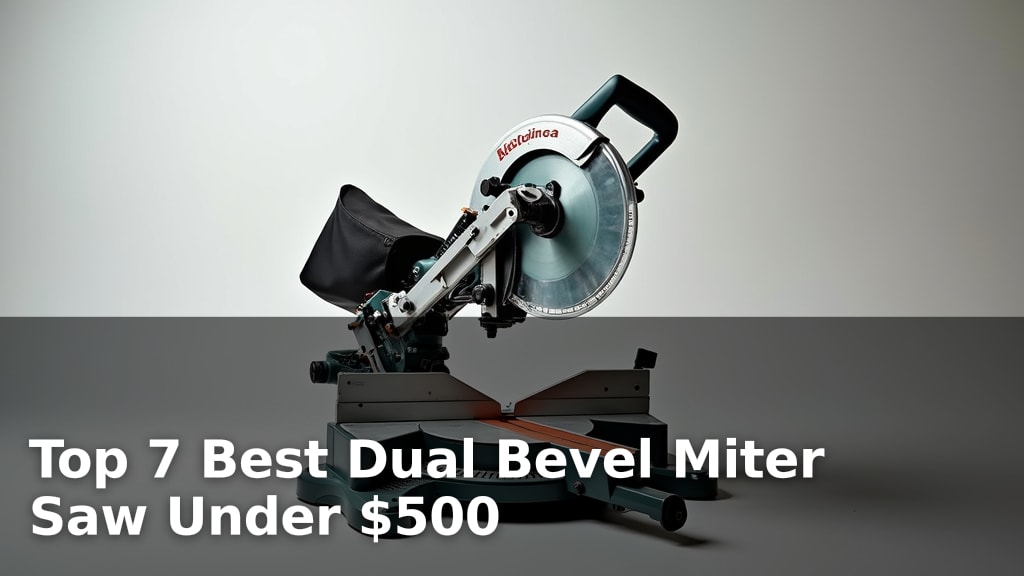
A dual-bevel sliding miter saw allows the blade to tilt both left and right, eliminating the need to flip your workpiece for compound cuts. While not strictly “necessary,” it saves time and effort, enhancing efficiency and accuracy for complex angles, making it a highly desirable feature for many users.