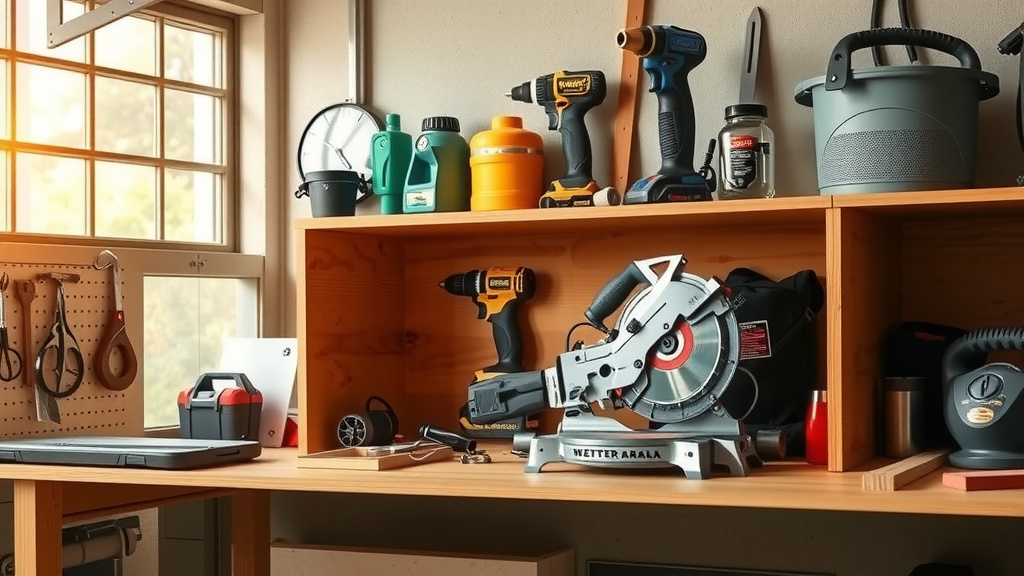
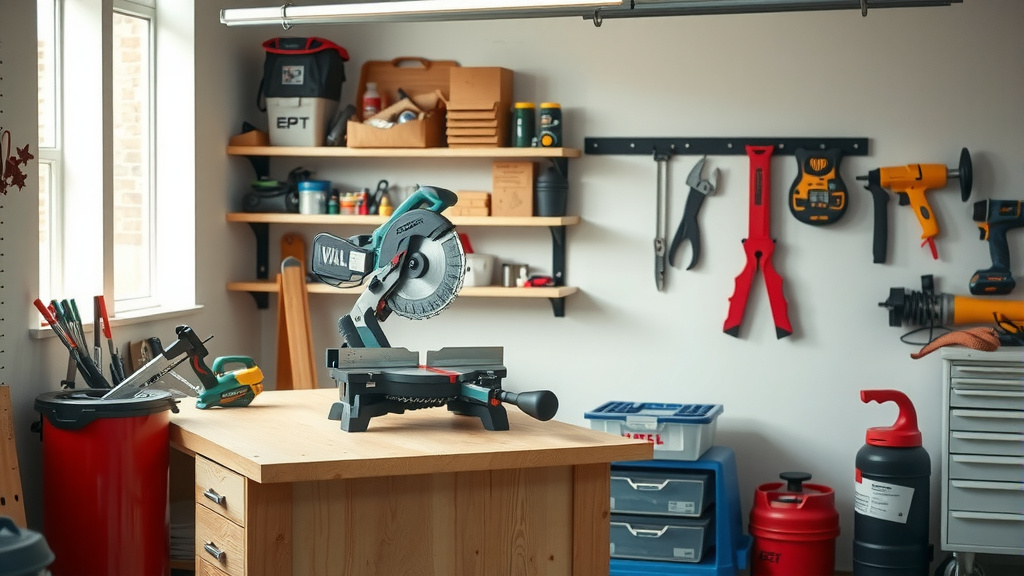
How to Choose Overhead Storage for a Miter Saw
Choose overhead storage for a miter saw by checking its rated load, mounting support, clearance and safe access. Match the storage system to the saw's weight and shape, then confirm the ceiling structure can support the full load.
On this page (9 sections)
- Which overhead storage options fit a miter saw?
- How much weight should the storage support?
- How do you check ceiling support and mounting?
- How much clearance does a stored miter saw need?
- Can you reach the saw safely?
- How should you prepare the saw for overhead storage?
- Which accessories belong near an overhead saw?
- What should you check before using overhead storage?
- How do you choose overhead storage options for a miter saw?
Choose overhead storage for a miter saw by matching the system's load rating to the saw's weight, securing it to suitable framing, and leaving enough room to lift and lower the saw with control. Check the saw manual and storage hardware instructions before mounting anything.
Overhead storage can free floor space, but a heavy saw is awkward to handle above shoulder height. If you can't lower it in a controlled way, a wall shelf or floor-level cabinet may be a safer fit.
Which overhead storage options fit a miter saw?
A ceiling-mounted platform or rated overhead rack can work if it supports the saw's full weight and keeps it stable. The right choice depends on your ceiling structure, available clearance and how often you use the saw.
| Option | Works well when | Check before choosing |
|---|---|---|
| Fixed ceiling shelf | You have a permanent storage spot and can safely reach it | Load rating, framing, shelf depth and a secure way to raise the saw |
| Overhead storage rack | The rack is rated for the weight and has a stable platform | Whether its design allows the saw to sit flat and stay restrained |
| Ceiling hoist or lift | You need to raise and lower a heavy saw with less manual lifting | Rated capacity, mounting points, controls and the maker's setup instructions |
| Wall-mounted shelf | Overhead lifting would be difficult or the ceiling has no suitable support | Shelf rating, wall framing and working clearance |
A storage system's advertised capacity is only useful if its mounting points connect to sound framing. Do not rely on drywall or ceiling panels alone to hold a saw.
How much weight should the storage support?
Choose hardware rated above the combined weight of the saw and anything stored with it. Check the saw's manual or label for its weight, then compare it with the storage system's rating and mounting instructions.
Include a stand, loose accessories or a dust bag if they will stay attached. Leave a margin instead of choosing a system that only just meets the calculated load.
For a hoist, check the rating of every load-bearing part, including the straps, hooks, pulleys and fasteners. The whole system is limited by its lowest-rated component.
If you need to move the saw into position, plan the lift before mounting the rack. Our guide on How To Lift Miter Saw? covers ways to handle the saw more deliberately.
How do you check ceiling support and mounting?
Find the ceiling joists or other structural framing and follow the storage system's mounting instructions. Fasten the hardware into suitable structural members, using the type and size of fasteners specified by the manufacturer.
A stud finder can help locate framing, but verify the position before drilling. Check for wiring, pipes and ducts in the area, and don't mount hardware where you can't confirm what is behind the ceiling surface.
Joist direction and spacing can affect which rack or platform fits. If the mounting pattern doesn't line up with framing, choose another location or a storage method designed for that structure.
Don't make a ceiling shelf from improvised brackets and assume it is safe because it feels secure when empty. Follow the hardware maker's load limits and installation steps.
How much clearance does a stored miter saw need?
Leave enough room to raise and lower the saw without hitting a ceiling, wall or nearby item. Measure the saw with its handle, motor housing and rails in the positions required for storage.
Sliding compound saws can extend behind or beside the base, so account for their full shape rather than measuring only the table. Check the manual for any required positions or limits when storing the saw.
Keep the blade guard clear and prevent the saw from shifting into other tools. Store loose accessories where they won't fall when the saw moves.
A dedicated spot makes it easier to put the saw back in the same stable position. For other storage locations, see Where To Store Miter Saw?.
Can you reach the saw safely?
Choose a setup you can use without climbing on unstable furniture or stretching while holding the saw. You should be able to control the saw throughout the lift and lowering process.
A ceiling lift may reduce the need to carry the full weight by hand, but it still needs correct mounting and a clear path. If the saw swings, catches or feels hard to guide, stop and reassess the system before using it.
Ask another person to help when the saw is too heavy or bulky to manage alone. Keep children and bystanders away from the lift area, and never stand beneath a suspended saw.
If overhead access feels awkward, choose floor-level storage instead. A lower position may take more space, but it makes routine setup and removal easier.
How should you prepare the saw for overhead storage?
Unplug the saw and follow its manual's instructions before lifting or storing it. Remove loose material, secure moving parts as directed and make sure the blade guard can move as intended.
For a compound saw, check the slide rails and head position as well as the base. This guide to How To Store Compound Miter Saw? covers those storage considerations.
Keep blades and small accessories contained so they can't fall during lifting. If you keep spare blades near the saw, use a suitable blade case or other secure holder rather than leaving them loose on the overhead platform.
For a clean crown molding setup after storage, DEWALT's crown stops position molding vertically against the saw fence and have steel construction.
Which accessories belong near an overhead saw?
Store only items that the rack or shelf is rated to carry, and keep the saw itself restrained. Don't overload the platform with accessories just because there appears to be space.
A blade is a useful example of an accessory that should have its own secure storage. The DEWALT set includes one 80-tooth blade and one 32-tooth blade, both 12 in, so plan a safe place for both instead of placing them loose beside the saw.
The Freud Diablo Finish Saw Blade is a 7-1/4 in blade designed for a circular saw. Check your saw's manual and blade requirements before considering it for any saw, and store it separately from the miter saw unless it is compatible.
What should you check before using overhead storage?
Inspect the mounting hardware and storage platform before each lift. Look for loose fasteners, bending, cracks, frayed straps or other signs of damage, and stop using the setup if anything looks unsafe.
Make sure the saw is seated and restrained as the storage system requires. Keep the lift path clear, and lower the saw slowly enough to guide it into position.
If you change saws, accessories or the storage arrangement, recalculate the total load and check fit again. A system that suited one saw may not suit a heavier model or a different footprint.
How do you choose overhead storage options for a miter saw?
Choose a rated ceiling platform or rack when the saw fits securely, the framing supports the load and you can lift it with control. Consider a hoist when its full system is rated for the load and installed exactly as directed.
Choose wall or floor-level storage if reaching overhead feels unstable or the ceiling support is uncertain. Before deciding, compare saw weight, mounting points, clearance and your ability to lower it safely, then review How To Choose A Miter Saw? and How To Use A Miter Saw? for the next steps in selecting and operating a saw.