Pipe Clamp vs Bar Clamp: Which Should You Choose? (November 2026)
Choose a pipe clamp when you need adjustable length for wide glue-ups; choose a bar clamp for a ready-to-use fixed reach and quick jobs. Your project size, setup time and storage space determine which style fits.
On this page (7 sections)
- Pipe clamp vs bar clamp: which gives you the reach you need?
- Which clamp is quicker to set up?
- Which style suits a woodworking glue-up?
- What should you consider for storage and cost?
- Which products fit each clamp choice?
- Should you choose quick-release pipe clamps?
- How should you choose between pipe and bar clamps?
Choose a pipe clamp when you need adjustable length for wide glue-ups; choose a bar clamp for a fixed reach that is ready to use. In a pipe clamp vs bar clamp decision, the project width and how often you need a different reach matter most.
A pipe clamp gets its working length from a separate pipe. A bar clamp's reach is built into its bar, so you choose a size that fits the job.
For a wider look at clamp types and workshop choices, see our woodworking clamps guide. For a separate workshop setup, see miter saw table clamping.
This comparison focuses on woodworking pipe clamps and bar clamps.

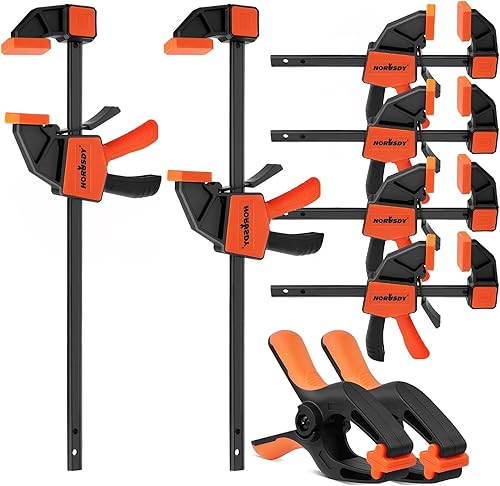 Best for a mixed-size clamp set
HORUSDY 8-Pack Bar Clamps for Woodworking
Pipe clamp vs bar clamp: which gives you the reach you need?
Pipe clamps let you change reach by changing the pipe; bar clamps have a fixed maximum reach. Measure the widest board assembly you expect to clamp, then leave room for the jaws and handle.
A 3/4 in pipe clamp fixture can fit compatible pipe lengths, so you can make a longer setup for a tabletop or a shorter one for a small panel. The pipe is a separate part of the setup, and its diameter and thread need to match the clamp.
A bar clamp is simpler when its fixed reach already covers your work. The HORUSDY set includes 6 in and 12 in clamps, with stated spreader limits of about 11-1/8 in and 17-3/8 in, respectively.
Don't assume the nominal clamp size equals the usable opening for every setup. Check the maker's stated opening or spread range for the exact model before planning a project around it.
When is adjustable pipe length useful?
Adjustable pipe length helps when your projects vary in width or need longer reach than your bar clamps provide. It also lets you keep clamp fixtures and pipes separate between jobs.
For a long edge glue-up, distribute clamps across the work and alternate them above and below the panel where practical. This helps balance pressure and reduce the chance of cupping.
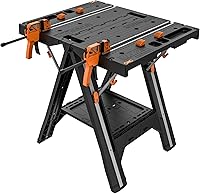
A portable surface such as the WORX Pegasus work table may also support a smaller glue-up.
Pipe length alone doesn't guarantee a flat panel. Use straight boards, align the joints, and apply even pressure while watching the edges as the glue closes.
Our guide to the best pipe for pipe clamps covers how to choose compatible pipe for your fixture. If you're comparing complete setups, see best pipe clamps for woodworking.
Which clamp is quicker to set up?
A bar clamp is usually quicker for a familiar job because its bar and jaws are already together. A pipe clamp needs the right pipe and the clamp parts fitted before you can set the work.
On the Bessey BPC-H34, the rear jaw slides over the pipe and can be positioned as needed. Its clutch plates hold the sliding jaw when released, while the front jaw screws onto one end of the pipe.
That setup offers flexibility, but it adds a part to select and handle. Keep pipes organized by length and check that each one is compatible before you begin a glue-up.
The HORUSDY bar clamps use a quick-change button to reverse the jaws and turn the F-clamps into spreaders. That can save time when a task calls for opening pressure instead of squeezing.
How do pipe clamp jaws position?
The sliding jaw sets the opening, and the threaded spindle applies pressure. Start with the jaws slightly wider than the work so you can position the assembly before tightening.
For a practical walkthrough, follow our guide on how to use pipe clamps. It can help you plan where the jaws and pipe sit before glue goes on the joint.
Don't use a clamp handle to force a badly aligned joint into place. Loosen it, correct the board position, then tighten again with controlled pressure.
Which style suits a woodworking glue-up?
Pipe clamps suit long or changing-width glue-ups, while bar clamps suit smaller jobs within their fixed reach. For either style, use enough clamps to hold the joint evenly without over-tightening.
A pipe clamp's longer reach can span wide panels when paired with a suitable pipe. The Bessey H-style base is designed to stabilize the clamp in 2 dimensions, and its soft pads help protect the work surface.
A bar clamp set is convenient for small assemblies, repairs and repeated tasks with similar dimensions. The HORUSDY set has multiple 6 in and 12 in bar clamps, plus 6 in spring clamps for lighter holding needs.
Use cauls or protective pads when clamp jaws might mark a finished face. Check that the workpiece remains aligned as pressure builds, especially across a panel made from several boards.
Can a pipe clamp be too long?
Yes, a pipe can extend far beyond the work and make a clamp setup harder to handle. Choose a length that gives the jaws enough room while leaving the assembly supported and stable.
Very long setups also take more storage space. If your shop has little wall or rack space, a few fixed-size bar clamps may be easier to keep organized.
Pipe clamps can still make sense when you need long reach only occasionally. Store pipes by length and keep the fixtures together so setup stays predictable.
What should you consider for storage and cost?
Bar clamps are easier to store as complete tools; pipe clamps let you store fixtures and pipes separately. Your available shelf or wall space can decide the better fit.
The HORUSDY set combines several clamp sizes in one group. You can keep the smaller clamps near a workbench and reserve the longer ones for wider assemblies.
A pipe clamp setup separates the fixture from the pipe, which gives you options but also means tracking two parts. If you already have compatible pipe, fixtures may be a practical way to add reach without storing another full-length clamp bar.
Think about how often you need each size before buying. A tool that fits your common work and stays easy to reach is more useful than a range you rarely use.
Which products fit each clamp choice?
Pick Bessey or PONY fixtures for adjustable pipe setups, and choose the HORUSDY set for several fixed bar-clamp sizes. For metalworking projects, see bar clamps for metalworking.
The Clout Fitness collars have a different job and are not woodworking clamps.
Should you choose quick-release pipe clamps?
Choose a quick-release pipe clamp if faster jaw positioning matters during repeated setups. Compare the release mechanism and pipe fit, then make sure the clamp still suits your workpiece size.
Our best quick release pipe clamps guide covers options for that style. Quick positioning can speed setup, but it doesn't replace checking alignment or applying even pressure.
If you need a clamp for a miter saw station instead of a woodworking glue-up, see our Best Miter Saw Clamp guide and how to use a miter saw clamp. Those clamps hold material for cutting and serve a different purpose from long-reach glue-up clamps.
How should you choose between pipe and bar clamps?
Choose pipe clamps for adjustable reach and wider projects; choose bar clamps for fast access to fixed sizes. Let your usual work and storage space guide the decision.
If your projects vary from small panels to wide tabletops, pipe fixtures can adapt when you change compatible pipe lengths. If you mostly make small assemblies, a ready-to-use bar clamp set can save setup steps.
Check the stated capacity, opening and pipe compatibility for each exact model. For both styles, protect the wood, place clamps evenly and tighten only enough to close the joint.
Choose the adjustable pipe route when reach changes often. Choose a fixed-size bar clamp set when speed and a range of smaller openings matter more.
Frequently asked questions
What is the main difference between a pipe clamp and a bar clamp?
A pipe clamp uses separate jaws fitted to a pipe, so changing the pipe length changes the clamp's reach. A bar clamp has its bar built in, with a fixed maximum reach.
Pipe clamps suit changing or wide glue-ups, while bar clamps are ready to use within their set size.
Are pipe clamps stronger than bar clamps?
You can't judge clamping force from the clamp style alone. Compare the maker's stated capacity for the exact models, and use only enough pressure to close the joint without bowing boards or squeezing out too much glue.
The HORUSDY set states up to 150 lb squeeze capacity; that figure doesn't describe the pipe clamps here.
Do pipe clamps need a special pipe?
They need a pipe that matches the clamp's size and thread requirements. The Bessey and PONY options here fit 3/4 in pipe, and PONY specifies black pipe.
Check the clamp instructions before choosing pipe, since a mismatched diameter or thread can prevent proper assembly.
Can bar clamps spread as well as clamp?
Some bar clamps can be reversed to spread, but check the model's design. The HORUSDY set has a quick-change button that lets its F-clamps function as spreaders after you reverse the jaws.
The pipe clamp options here are described for clamping rather than spreading.
Can I use barbell collars as woodworking clamps?
No. The Clout Fitness collars are designed to lock plates onto 2 in weight bars, not to hold boards together.
For woodworking, choose a pipe clamp or bar clamp with jaws and a reach suited to the workpiece.