What Is a Bevel Angle on a Miter Saw?
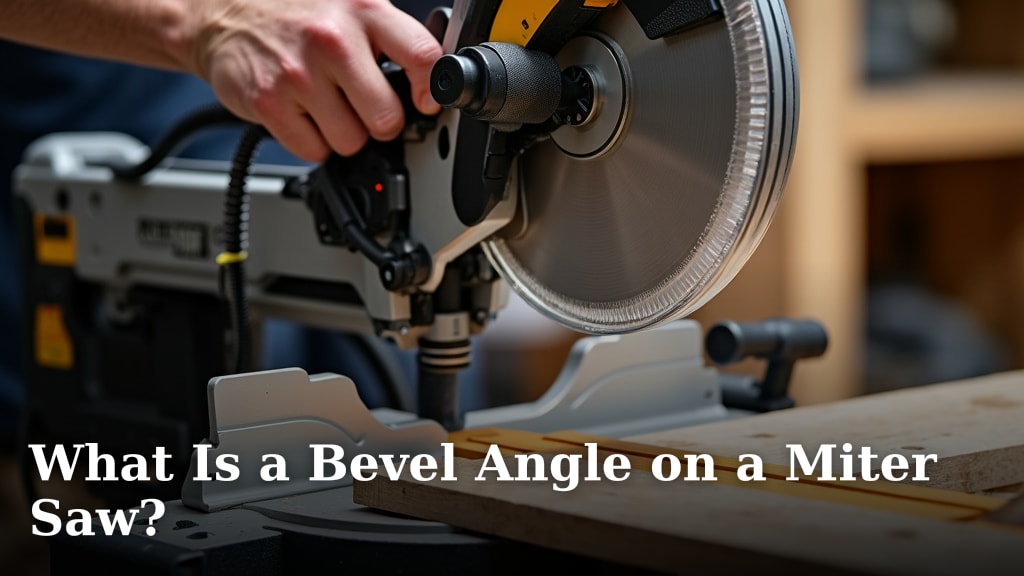
A bevel angle on a miter saw is the tilt angle of the blade. It allows you to make angled cuts across the edge of your material. You adjust this angle to create specific joints, like those used in crown molding or picture frames.
Understanding your miter saw’s bevel capacity is key for accurate woodworking. It’s different from the miter angle, which cuts across the width of your board. Many projects require both precise miter and bevel cuts to achieve professional-looking results. Knowing your saw’s limits helps prevent frustrating mistakes.
- A bevel angle is the blade’s tilt.
- It’s used for angled cuts on the edge of wood.
- It’s essential for joinery like molding and framing.
- It’s distinct from the miter angle cut.
Let’s dive into what the bevel angle means for your projects and how to set it correctly on your miter saw.
Understanding the Bevel Angle on Your Miter Saw
So, what exactly is this “bevel angle” you keep hearing about when it comes to your miter saw? Simply put, it’s the tilt of the saw blade. Think of it like tipping the blade to one side instead of letting it cut straight down. This tilting ability is what allows you to create those angled cuts along the thickness or edge of your material. It’s different from the miter angle, which cuts across the width of the board. You’ll use the bevel angle for those special joints that make your projects look really professional, like framing a mirror or installing crown molding.
Many projects, especially decorative ones, require you to use both the miter and bevel settings. For instance, cutting crown molding often involves setting your saw to a specific miter angle AND a specific bevel angle. Getting these right means your pieces will join together perfectly, with no unsightly gaps. Understanding your saw’s bevel capacity is really important for achieving accurate woodworking.
Bevel Angle vs. Miter Angle: What’s the Difference?
It’s super common to get the bevel angle and the miter angle confused, especially when you’re just starting out. Let’s clear this up right now! The miter angle is about the horizontal rotation of the saw arm. It’s the angle you set when you want to cut the end of a board at an angle, like the corner of a picture frame. Imagine swinging the whole saw head left or right.
The bevel angle, on the other hand, is about the vertical tilt of the blade itself. When you adjust the bevel, you’re tipping the blade from its upright position. This lets you cut an angle on the face or edge of your material, not just the end. Many beginner woodworkers mistakenly think the miter saw is only for “miter” cuts. But that tilting action is what makes a miter saw so versatile!
Visualizing the Angles
Try to picture this: You’re making a simple square picture frame. Each corner needs a 45-degree cut. To make these cuts, you’ll rotate the saw head left or right to achieve the 45-degree miter angle. Now, imagine you’re installing crown molding. This often requires cutting a piece at an angle that isn’t flat against the wall. You’ll need to tilt the blade to a specific bevel angle, say 31.6 degrees (a common setting for 38-degree crown molding), while also setting a miter angle. See how they work together?
How Does the Bevel Angle Work on Your Saw?
Most miter saws allow you to adjust the bevel angle by loosening a lock and then tilting the saw head. You’ll usually find a scale or indicator that shows you the exact angle you’re setting. Some saws have detents, which are preset positions at common angles like 0, 15, 22.5, 30, and 45 degrees. These make it super easy to get to those standard angles quickly and accurately.
For cuts that aren’t at a standard angle, you’ll rely on the marked scale. You might need a combination square or protractor to double-check your setting if precision is absolutely critical. It’s always a good idea to make a test cut on scrap wood to confirm your angle is spot on before cutting your good material. We’ve found that a little test cut saves a lot of headaches later!
Single Bevel vs. Dual Bevel Miter Saws
When you’re shopping for a miter saw, you’ll notice two main types: single bevel and dual bevel. A single bevel saw can only tilt the blade in one direction. This means if you need to make an angled cut on the opposite side of your material, you’d have to flip the board over and re-measure. It works, but it can be a bit more time-consuming and prone to small errors. A single bevel saw can only tilt the blade in one direction, which is different from a dual bevel saw.
A dual bevel saw, on the other hand, can tilt the blade in either direction (left or right). This is a huge time-saver and accuracy booster for projects that require repeated angled cuts on opposite sides. For example, cutting both sides of a roof rafter or installing wainscoting often benefits greatly from a dual bevel saw. While they might cost a bit more upfront, many users find the convenience and improved accuracy make them well worth the investment.
Why Are Bevel Angles Important for Your Projects?
The bevel angle is your ticket to creating professional-looking joinery. Without it, many common woodworking tasks would be incredibly difficult, if not impossible. Think about the smooth, seamless corners on a well-made cabinet or the tight joints in a decorative frame.
Here are a few examples of where the bevel angle really shines:
- Crown Molding Installation: As mentioned, installing crown molding requires specific bevel and miter angles to make the molding sit flush against both the wall and the ceiling. Getting these angles wrong leads to gappy, unprofessional-looking results.
- Picture Frames and Box Joints: Creating strong and attractive corners for picture frames, display boxes, or even simple drawers often involves precise bevel cuts on the ends of the pieces.
- Trim Work: Interior and exterior trim work, like baseboards or window casings, often requires bevel cuts to create tight joints where pieces meet.
- Stair Treads and Risers: Some stair construction techniques use

Conclusion
You’ve learned that a miter saw’s bevel angle is the blade’s tilt, essential for creating professional-looking joints. It’s distinct from the miter angle, which rotates the arm. Understanding your saw’s bevel capacity, whether single or dual, directly impacts your project accuracy and efficiency. From crown molding to picture frames, mastering the bevel angle opens up a world of precise woodworking possibilities.
The next step is simple: grab some scrap wood. Practice setting your bevel angle and make a few test cuts. This hands-on approach will build your confidence and ensure your future projects turn out exactly as you envision them.
Frequently Asked Questions
What’s the most common bevel angle used in woodworking?
The most common bevel angle is 45 degrees, often used for four-sided frames like picture frames or boxes. However, many projects, especially crown molding, require specific non-standard angles like 31.6 degrees.
Can I make bevel cuts without a miter saw?
While not as precise or easy, you can make some bevel cuts with other tools like a table saw (with tilting blade) or by carefully using a hand saw and a protractor. Miter saws are specifically designed for this task, offering the most accuracy and ease.
How do I know if my miter saw is set to the correct bevel angle?
Most miter saws have a clear angle indicator and scale. For critical cuts, it’s best to use a protractor or combination square to verify the angle before cutting. Always perform a test cut on scrap material.
What is the difference between a bevel cut and a compound cut?
A bevel cut involves only tilting the blade (the bevel angle). A compound cut involves tilting the blade (bevel angle) AND rotating the saw arm (miter angle) simultaneously. This creates an angled cut on two planes.
Why would I need a dual bevel miter saw over a single bevel?
A dual bevel saw tilts in both directions, saving you time and preventing errors when you need to make angled cuts on opposite sides of a workpiece. For projects requiring many angled cuts, like trim work or framing, a dual bevel saw is much more efficient.