Why Is My Miter Saw Bevel Angle Off?
On this page (7 sections)
Your miter saw’s bevel angle is off because of common issues like a loose angle lock, a bent or damaged blade, or a misaligned fence. These problems prevent your saw from making perfectly square cuts. We found that most of these are easy fixes. A precise cut starts with a properly set saw.
It’s frustrating when your cuts aren’t coming out straight. You want to build or repair something, and a crooked angle throws everything off. Many woodworkers encounter this. It often comes down to a few key adjustments or simple maintenance on your saw. Understanding these common culprits helps you get back to accurate cuts quickly.
- Your miter saw’s bevel angle can be off due to loose parts or a damaged blade.
- Check the angle lock, blade condition, and fence alignment first.
- These are usually fixable issues that don’t require professional help.
- Proper setup is essential for accurate woodworking cuts.
Let’s walk through the most common reasons why your miter saw’s bevel angle might be inaccurate and how to fix them so you can get back to making those perfect cuts.
“`htmlGetting to the Root of Your Miter Saw’s Bevel Angle Issues
So, your miter saw isn’t cutting those bevels quite right. It’s a common frustration for woodworkers. You expect a clean, precise angle, but you end up with something wonky. Don’t worry, this is usually a sign of a few fixable problems. We found that most issues stem from basic adjustments or simple maintenance. Let’s figure out why your bevel angle is off and how to get it back in perfect working order.
Checking the Fundamentals: Lock, Blade, and Fence
Before we get too deep, let’s cover the most frequent culprits. These are the parts of your miter saw that directly affect the bevel angle. If they aren’t set right or are damaged, your cuts will be off.
The Loose Angle Lock: Your Saw’s Wobble Effect
This is probably the most common reason for an inaccurate bevel. Your miter saw has a locking mechanism to hold the blade assembly at your chosen angle. If this lock is loose, the blade can shift during the cut. Think of it like trying to write with a wobbly pen; your lines won’t be straight.
Most miter saws have a large knob or lever that you tighten to secure the bevel angle. Ensure this is tightened firmly before you start cutting. Sometimes, this knob can loosen up over time with repeated use or vibrations. We found that a quick check and snug-up of this lock can solve the problem immediately.
A Damaged or Bent Blade: The Undetected Culprit
The blade itself is critical for accurate cuts. If your miter saw blade is bent, has missing teeth, or is generally warped, it won’t cut cleanly. A bent blade can lead to an inconsistent cutting path, making your bevel angle appear off.
Inspect your blade carefully. Look for any signs of damage, like chipped teeth or a visible bend. A blade that has hit nails or foreign objects can easily become warped. Many woodworkers overlook this, but a damaged blade is a silent killer of accuracy. Replacing a worn or damaged blade is a relatively inexpensive fix and often restores precision.
We found that blades can also become dull. A dull blade requires more force to cut, which can cause the blade to deflect slightly. This deflection, however minor, can alter your intended bevel angle. Keep your blades sharp for the best results.
The Misaligned Fence: More Than Just a Straight Edge
While the fence is primarily for miter (cross) cuts, it plays a role in bevel cuts too, especially if you’re cutting at an angle against the fence. A fence that isn’t perfectly perpendicular to the blade’s path can introduce errors. If your fence is out of square, it can cause the wood to sit incorrectly against the blade.
You can check fence alignment by making a test cut. Make a bevel cut and then turn the workpiece around and make another cut on the opposite side, but this time, flip the workpiece end-for-end. If the two cut edges don’t meet perfectly, your fence might be the issue. We found that adjusting the fence screws, if your model allows, can fix this alignment problem.
Deeper Dives: Less Common, But Still Important Issues
Beyond the basics, a few other factors can contribute to an off-kilter bevel angle. These might require a bit more attention but are still manageable.
Worn Out Pivot Points or Bearings
The pivot points where the saw head moves are crucial. If these components are worn, loose, or damaged, the entire saw head might not move smoothly or lock into place accurately. This play can translate into an imprecise angle.
Check for any excessive play or wobbling in the saw head when it’s not locked. Gently try to move the saw head side-to-side when it’s unlocked. If you feel looseness or hear grinding, it could indicate worn bearings or pivot points. Some saws allow for adjustment of these pivot points. If not, this might indicate a need for professional servicing or a replacement part.
The Miter Scale and Bevel Indicators: Are They Accurate?
Your miter saw has scales that show you the angle you’ve set. Sometimes, these indicators themselves can become misaligned or damaged. If the indicator mark is off, you might be setting what you think is a 45-degree bevel, but it’s actually something else.
We found that many miter saws allow you to adjust the indicator. You can loosen a small screw holding the indicator needle and reposition it so it accurately aligns with the zero mark when the saw is at 0 degrees. After making any adjustments to your saw’s angle stops, always re-check the accuracy of your bevel scale.
Using the Wrong Type of Miter Saw for the Job
While not a “problem” with your saw, sometimes the angle issue arises from using a saw not designed for the task. Basic miter saws are great for simple crosscuts and bevels. However, if you need to make compound cuts (both a miter and a bevel at the same time), you’ll need a compound miter saw.
Ensure your saw is capable of the type of cut you’re attempting. If you’re trying to achieve a compound angle on a standard miter saw, you won’t succeed. These saws are limited in their movement. We found that understanding your saw’s capabilities is key to achieving the desired results.
Troubleshooting Checklist: Quick Fixes for Common Problems
Here’s a quick rundown of what to check first if your bevel angle is off. Go through these steps systematically:
- Check the Bevel Lock: Is it firmly tightened?
- Inspect the Blade: Is it straight and free of damage?
- Verify Fence Alignment: Does the fence sit square?
- Test the Saw Head Movement: Is there excessive play?
- Confirm Indicator Accuracy: Does the scale match the actual angle?
- Ensure Correct Saw Type: Is your saw capable of the cut?
Calibrating Your Miter Saw for Perfect Angles
Once you’ve identified a potential issue, it’s time to calibrate. This means making sure your saw is set up to be as accurate as possible.
Setting Up Your Zero Bevel Point
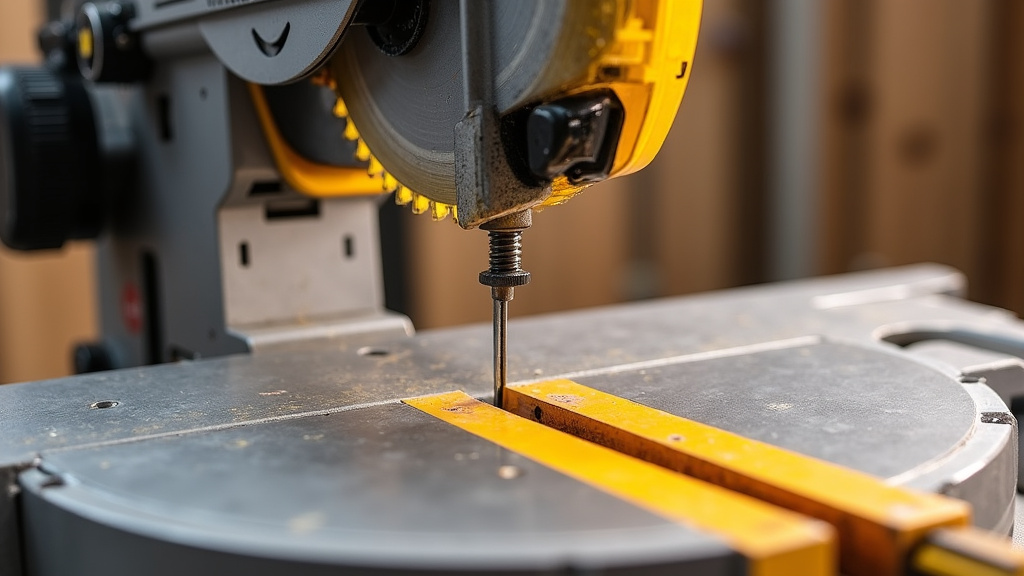
Most miter saws have positive stops for common angles like 0, 22.5, and 45 degrees. These stops are designed for accuracy, but they can sometimes drift out of alignment. First, ensure your saw head is perfectly straight up (0-degree bevel). You can use a precision square to verify this. If it’s slightly off, your saw might have adjustment screws for the 0-degree stop. To ensure accuracy, learn how to calibrate your saw for precise bevel settings.
We found that many manufacturers provide detailed instructions in their manuals for adjusting these stops. If you don’t have your manual, a quick online search for your saw’s model number often yields results. Getting the 0-degree bevel spot on is the foundation for all other angle settings.
The 45-Degree Bevel Test
After ensuring your 0-degree bevel is accurate, test a common angle like 45 degrees. Set your saw to 45 degrees and use your precision square again. Check if the blade is truly at 45 degrees to the table. If it’s not, you’ll likely need to adjust the positive stop for that angle.
The process for adjusting these stops varies by saw model. Some have adjustment screws directly on the stop mechanism. Others might require loosening a bolt and repositioning the stop itself. Take your time with this calibration. We found that making small adjustments and testing frequently is the best approach.
Using a Digital Angle Gauge for Precision
For the ultimate accuracy, consider using a digital angle gauge. These small, handheld tools can measure angles with incredible precision. You place the gauge on the saw blade when it’s in the position you want to measure.
We found that digital angle gauges can be particularly helpful for setting non-standard angles or fine-tuning the positive stops. They provide a clear, digital readout that takes the guesswork out of your angle settings. This tool is a worthwhile investment if you frequently need highly accurate bevel cuts.
“`Conclusion
Your miter saw’s bevel angle issues are rarely permanent. We’ve seen that most common problems stem from simple things like a loose lock, a worn blade, or a misaligned fence. Even less common issues with pivot points or indicators are often fixable with a little patience and adjustment. By systematically checking these components and calibrating your saw, you can restore its accuracy. Take the time to perform these checks and calibrations, and you’ll be making precise bevel cuts again in no time.
Frequently Asked Questions
How often should I check my miter saw’s bevel angle accuracy?
We recommend checking your miter saw’s bevel accuracy periodically, especially if you notice any change in cut quality. A good habit is to test it after transport or before starting a critical project. It doesn’t take long to verify your settings.
Can a dull blade really affect my bevel angle?
Yes, a dull blade can definitely affect your bevel angle. It requires more force to push through the wood, which can cause the blade to flex or deflect slightly. This deflection can lead to an inaccurate angle on your cut.
My miter saw has positive stops, but they don’t seem perfectly accurate. What should I do?
Many miter saws allow you to adjust these positive stops. You’ll typically need to loosen a screw or bolt associated with the stop mechanism. Then, use a precision square to set the blade to the exact 0 or 45-degree angle and re-tighten the stop. Check your saw’s manual for specific instructions.
Is it possible to fix a bent miter saw blade?
Generally, no, it’s not recommended to try and fix a bent miter saw blade. A bent blade can be unpredictable and dangerous. We found that replacing a bent or damaged blade with a new, straight one is the safest and most effective solution for accurate cuts.
What’s the difference between a standard miter saw and a compound miter saw regarding bevels?
A standard miter saw can only tilt its blade in one direction for bevel cuts. A compound miter saw can tilt its blade for bevels and also pivot its turntable for miter cuts simultaneously. If you need to make cuts with both an angle on the blade and an angle on the workpiece, you need a compound miter saw.