What Is A Miter Saw Used For?
A miter saw is primarily used for making precise crosscuts and angled cuts in workpieces, especially wood trim, molding, and framing lumber.
It excels at repetitive accurate cuts for projects like picture frames, crown molding, and deck building, ensuring clean, tight joints with professional precision.
Here’s a quick overview of what a miter saw brings to your workshop:
- Makes precise angled and crosscuts.
- Perfect for trim work, molding, and framing.
- Offers accuracy and repeatability for professional results.
- Essential for DIY projects and professional carpentry.
- Different types cater to various cutting needs.
What Is A Miter Saw Used For?
A miter saw is a cornerstone tool for anyone doing precise woodworking, from a casual DIYer to a seasoned professional. You’ll find it invaluable for tasks requiring exact angles and straight cuts across a board’s width. Think of it as your go-to for making wood pieces fit together flawlessly.
Understanding the Core Function of Your Miter Saw
At its heart, a miter saw is designed for accuracy. We found that its main purpose is to cut boards at a specific angle, called a miter, or a specific tilt, called a bevel. This versatility makes it ideal for joining pieces that need to meet seamlessly, creating strong and attractive joints for your projects.
The Art of Angle Cutting
Ever tried to make a picture frame with hand tools? It’s tough to get those 45-degree angles just right. See our side-hustle projects guide for more on this option. A miter saw makes this simple. You can adjust the saw blade to cut at almost any angle you need. This ability to make both miter and bevel cuts is what sets it apart from many other saws, offering a huge advantage.
Essential Projects for Miter Saws
So, what kind of projects truly shine when you bring out your miter saw? We’ve seen its value across a wide range of applications. It often becomes the most used tool for many builders. Here are some common tasks where it really helps you achieve that polished look.
Flawless Trim and Molding Work
If you’ve ever installed baseboards, crown molding, or door casings, you know how important accurate angles are. A miter saw is the absolute best tool for this job. It ensures every corner meets perfectly, giving your home a professional finish. Many experts say this is where the miter saw truly excels (The Family Handyman).
Framing for Strength and Beauty
Building a shed, a deck, or even interior wall frames? The miter saw is your friend. It provides the consistent, straight cuts needed for structural framing. This accuracy helps you create a solid and square structure. Imagine building a strong, reliable deck with ease – that’s the power of this tool.
Crafting Perfect Picture Frames
Thinking about making a custom picture frame or mirror frame? You’ll need four pieces of wood cut at precise 45-degree angles to form perfect 90-degree corners. A miter saw makes this task not just possible, but surprisingly straightforward, giving you beautifully joined corners every time. It’s a rewarding project with the right tool.
Different Types of Miter Saws and Their Uses
Not all miter saws are created equal, and knowing the differences can help you pick the right tool for your specific needs. Each type offers unique features for various applications. Understanding these variations can really improve your project outcomes.
Standard Miter Saws
A standard miter saw, sometimes called a chop saw, makes straight crosscuts and basic miter cuts. It’s perfect for simpler tasks like cutting shelving or small trim pieces. This is often a great starting point for beginners. It’s a reliable workhorse for everyday cuts.
Compound Miter Saws
A compound miter saw takes things up a notch by adding bevel capabilities. This means you can cut both a miter (angle horizontally) and a bevel (angle vertically) simultaneously. This is perfect for crown molding, which often requires complex angled cuts on two planes. It really simplifies tricky cuts.
Sliding Compound Miter Saws
Need to cut wider boards, like a 2×12 for a deck header? A sliding compound miter saw is your answer. Its blade can slide forward and backward along a rail, increasing its cutting capacity significantly. Many professionals consider this the most versatile type. It’s like having an extra-long arm for your saw.
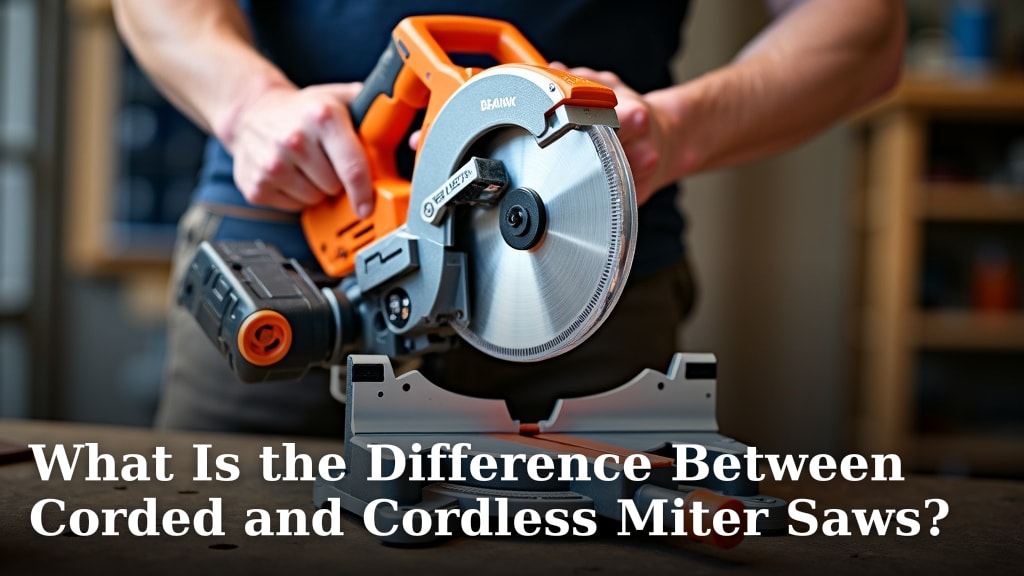
Cordless Miter Saws for Portability
For job sites or areas without power outlets, a cordless miter saw offers unmatched freedom. While often less powerful than corded versions, they are incredibly convenient. If you move your workshop around or work outdoors, this type gives you flexibility and independence. It’s perfect for on-the-go projects.
Beyond Wood: Cutting Other Materials
While often associated with wood, a miter saw isn’t exclusively a wood-cutting tool. With the right blade, you can expand its utility. Just remember, changing blades correctly is key for safety and effectiveness.
- Plastics: Special fine-tooth blades can cut PVC pipes, plastic molding, and other synthetic materials cleanly.
- Aluminum: Use a non-ferrous metal cutting blade to precisely cut aluminum extrusions or window frames.
- Composites: Fiber cement siding can be cut with specific diamond-tipped blades, reducing dust and tear-out.
- Laminate Flooring: A fine-tooth blade makes clean, chip-free cuts for laying laminate flooring seamlessly.
Why Choose a Miter Saw Over Other Saws?
With so many saws available, why opt for a miter saw? It boils down to a few key advantages. Research often connects miter saws with superior precision and repeatability, especially for specific types of cuts (Fine Woodworking). You get consistent results every single time.
| Feature | Miter Saw | Circular Saw |
|---|---|---|
| Accuracy for Angles | Excellent, precise miter and bevel settings. | Good for straight cuts, difficult for accurate angles. |
| Repeatability | High, cuts identical pieces quickly. | Lower, harder to get identical repeated cuts. |
| Portability | Can be heavy, but smaller models are portable. | Very portable and handheld. |
| Material Width | Limited by blade size (except sliding models). | Unlimited, can cut any width. |
| Best Use Case | Trim, molding, framing, precise crosscuts. | Sheet goods, rough cuts, rip cuts. |
Before you make your first cut, remember to do a quick check. Being prepared is half the battle, and it ensures your safety. Many guidelines point to preparation as a good first step (OSHA).
- Always wear safety glasses.
- Ensure the blade is sharp and clean.
- Secure your workpiece firmly with clamps.
- Check that the saw is stable on a flat surface.
- Read your saw’s manual for specific instructions.
- Clear the area of any obstructions or loose items.
Conclusion
A miter saw is an incredibly versatile and precise tool that belongs in nearly every workshop. Its ability to create perfect angled and crosscuts makes it indispensable for tasks ranging from intricate trim work to robust framing projects. By understanding its capabilities and choosing the right type for your needs, you can unlock a new level of accuracy and efficiency in your woodworking. It truly helps you turn your visions into beautifully crafted realities, giving your projects that professional and polished touch.
What’s the difference between a miter cut and a bevel cut?
A miter cut is an angle made across the face of the board, typically used for joining corners in a flat plane (like a picture frame). A bevel cut is an angle made through the thickness of the board, where the blade tilts away from the vertical position, often seen in crown molding or angled edges.
Can a miter saw cut metal?
Yes, a miter saw can cut certain types of metal, specifically non-ferrous metals like aluminum or brass. You must use a specialized carbide-tipped blade designed for cutting non-ferrous metals. Never use a wood blade for metal, as it is dangerous and will damage the blade and material.
How do I choose the right blade for my project?
Choosing the right blade depends on the material and the desired finish. For wood, fewer teeth (24-40) are good for faster, rougher cuts, while more teeth (60-80+) provide finer, smoother cuts for finish work. Always match the blade type (e.g., crosscut, combination) and material rating to your project.
Is a sliding miter saw always better than a standard one?
Not always. See our miter saws for students guide for more on this option. A sliding miter saw offers a greater cross-cutting capacity, allowing it to cut wider boards. However, it’s usually more expensive, heavier, and takes up more space than a standard or compound miter saw. If you primarily cut narrow boards, a standard compound miter saw might be a more practical and economical choice.
What safety precautions should I always take?
Always wear eye protection (safety glasses) and hearing protection. See our heavy-duty miter saws guide for more on this option. Ensure the workpiece is securely clamped to prevent kickback. Keep your hands clear of the blade path, and never reach over or behind the spinning blade. Always unplug the saw when changing blades or making adjustments, and keep the work area clean and clear.