9 Best Five-Inch Random Orbital Sanders (November 2026)
The best 5 inch random orbital sanders include the DEWALT Orbital Sander Kit for general finishing work, the DEWALT Orbital Sander for a low-profile palm sander, and the CRAFTSMAN Orbital Sander for straightforward surface prep.
On this page (6 sections)
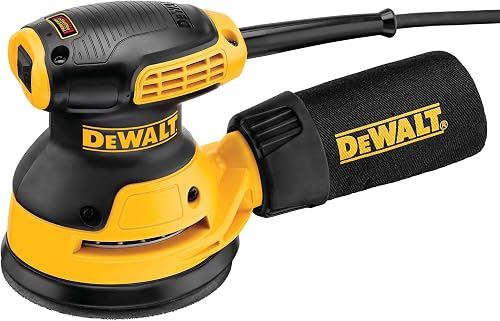
The best 5 inch random orbital sander for most users is the DEWALT Orbital Sander Kit, with a 3 amp motor, 12,000 OPM and a locking dust bag. Choose SKIL for variable speed, or BLACK+DECKER when a compact body matters most.
A 5 in random orbital sander is a useful middle size for furniture, trim, cabinets, doors and general finishing work. To compare its motion with other orbital designs, see orbital vs random orbital sanders.
The round pad gives you a broad working area without the size of a larger floor or drywall sander.
If you're comparing sanding formats first, read our guide to different types of sanders. For brand-specific options, see the best DeWalt five-inch orbital sanders, best Makita five-inch orbital sanders and best Bosch five-inch orbital sanders.
Our picks at a glance
-
1

-
2
-
3

- 4
 Best for compact sanding spacesCheck it
- 5
 Check it
SKIL 5” Random Orbital Sander with Cyclonic
Best for variable-speed control - 6
 Check it
HYCHIKA 5-Inch Random Orbital Sander
Best for a ready-to-use grit range - 7
 Best for multi-grit furniture workCheck it
- 8
 Check it
POTUINOM 165 PCS 5 Inch Sanding Discs
Best for a broad abrasive assortment - 9
 Check it
Dong Cheng 5-Inch Random Orbital Sander 3.2A
Best for a complete variable-speed kit
How we chose the best 5 inch random orbital sander
The best 5 inch random orbital sander depends on speed control, motor rating, dust handling, included abrasives and how often you expect to sand. For pneumatic options, compare air-powered orbital sanders.
We judged each tool on furniture, trim, cabinets and doors rather than by one headline number alone. Fixed-speed DEWALT, CRAFTSMAN and BLACK+DECKER models run at 12,000 OPM, while SKIL, HYCHIKA, DCK and Dong Cheng add variable speed settings.
One fixed speed suits routine prep and smoothing for many users. Variable speed helps when you move between coarse removal and finer finishing or need a gentler pace on delicate surfaces.
Dust control changes daily use. Some picks use a dust bag, SKIL uses a transparent cyclonic dust box, and the DEWALT kit can connect directly to DWV010 or DWV012 dust collectors.
A bag suits short jobs, while a vacuum connection keeps larger projects cleaner over several hours. Included abrasives also matter because several grits in the box let you start without a separate purchase.
Motor rating supports harder work, but body size, grip and pad control shape how easy a tool feels in the hand. Our score weighs specs, features and buyer feedback, with more weight on balance, control and dust handling than on speed alone.
| Product | Best for | Power | Speed | Dust handling | Our score |
|---|---|---|---|---|---|
| DEWALT Orbital Sander Kit | general finishing work | 3 amp corded electric | 12,000 OPM | Locking dust bag; DWV010 and DWV012 connection | 9.5 |
| DEWALT Orbital Sander | a low-profile palm sander | 3 amp corded electric | 12,000 OPM | 9.4 | |
| CRAFTSMAN Orbital Sander | straightforward surface prep | 3 amp corded electric | 12,000 OPM | 9.3 | |
| BLACK+DECKER Orbital Sander | compact sanding spaces | 2.0 amp corded electric | 12,000 OPM | 9.3 | |
| SKIL 5” Random Orbital Sander with Cyclonic | variable-speed control | 2.8 amp corded electric | 7,000–13,000 OPM | X-flow transparent dust box | 9.2 |
| HYCHIKA 5-Inch Random Orbital Sander | a ready-to-use grit range | Corded electric, 120V | Up to 13,000 RPM | 8.9 | |
| DCK Random Orbital Sander | multi-grit furniture work | 3 amp corded electric | Up to 12,000 OPM | 8.6 | |
| POTUINOM 165 PCS 5 Inch Sanding Discs | a broad abrasive assortment | 8.4 | |||
| Dong Cheng 5-Inch Random Orbital Sander 3.2A | a complete variable-speed kit | 3.17 amp corded electric | 8,000–12,800 OPM | 8.2 |
The best 5 inch random orbital sanders compared
These are the strongest choices in score order. The first four suit common finishing work, while the remaining picks add variable speed, included abrasives or accessory value.
DEWALT Orbital Sander Kit: Best for general finishing work
- 5 in pad
- 3 amp motor
- 12,000 OPM
- Dust bag and carrying bag
The 3 amp motor and 12,000 OPM suit common surface preparation and finishing work. A counterweight, rubber over-mold and dust collection features make it the most balanced choice here.
Pros
- 3 amp motor
- Separate counterweight
- Dust bag and carrying bag
Cons
- Single speed
- Corded operation
The DEWALT Orbital Sander Kit is the best all-around pick for general finishing work. For sanding contours, see 5-inch orbital sander interface pads.
Its 3 amp motor spins the 5 in pad at 12,000 OPM, giving you a fixed setup for surface preparation and smoothing.
The separate counterweight is designed to reduce vibration. Rubber over-mold in critical areas gives you more grip contact, while the shorter height helps you work closer to the surface.
Dust handling is stronger than a basic dust bag alone. The kit includes a one-handed locking dust bag, and the dust port is designed for direct connection to DWV010 or DWV012 dust collectors.
A DWV9000 Universal Quick Connector is needed for other vacuum systems with 1-1/4 in hoses.
The box includes the sander, dust bag and carrying bag. Choose this model if you want a complete corded setup with dust collection options and don't need variable speed.
DEWALT Orbital Sander: Best for a low-profile palm sander
- 5 in pad
- 3 amp motor
- 12,000 OPM
- Dust bag
This DEWALT uses the same 3 amp and 12,000 OPM combination in a compact palm-sander format. Its shorter height helps you get closer to the work surface.
Pros
- Shorter design
- Separate counterweight
- Dust-sealed switch
Cons
- Single speed
- No carrying bag listed
The DEWALT Orbital Sander is a strong low-profile 5 in palm sander. Its 3 amp motor delivers 12,000 OPM, matching the kit's sanding speed in a simpler package.
The shorter design brings your hand closer to the workpiece. That lower profile helps you control flat panels and edges with steady pressure over a wide area.
A separate counterweight reduces vibration, and rubber over-mold areas add grip where your hand contacts the sander. Together those details suit longer sanding sessions where comfort matters.
It includes the sander and a dust bag. The dust-sealed switch helps protect against dust ingestion, which matters when you regularly sand unfinished wood or remove old coatings.
Set-up is straightforward with the hook and loop pad. Press the disc firmly in place, check that it sits flat, and change it when the grit clogs or stops cutting cleanly.
Brush dust from the pad and vents while unplugged, and keep the switch area clear so fine dust does not build up inside the housing. Choose this model when the sander itself is the priority, and choose the DEWALT kit above if you need a carrying bag.
CRAFTSMAN Orbital Sander: Best for straightforward surface prep
- 5 in pad
- 3 amp motor
- 12,000 OPM
- On-board dust bag
The CRAFTSMAN combines a 3 amp motor with 12,000 OPM for surface preparation, seam smoothing and paint or varnish removal. Its low-profile design supports control during flat sanding.
Pros
- 3 amp motor
- Dust-sealed switch
- Sample sandpaper included
Cons
- Single speed
- Dust connection size may limit hose choices
The CRAFTSMAN Orbital Sander suits straightforward surface preparation, seam smoothing and paint or varnish removal. Its 3 amp motor and 12,000 OPM provide a fixed-speed setup for flat sanding.
The low-profile design is made for control and reduced vibration. A flatter body helps the pad stay level on worktops, doors and panels, which supports an even finish across broad surfaces.
An on-board dust bag handles collected dust, and the sander can connect to a 1-3/4 in vacuum hose. That gives you a simple bag for small jobs or a hose for longer work in one shop area.
The dust-sealed switch adds durability for dusty work by limiting dust reaching the switch. That is useful when sanding old coatings that create fine debris.
The package includes the CMEW231 random orbit sander, dust bag and sample sandpaper. That sample sheet lets you check the hook and loop fit and begin light prep work right away.
Check your vacuum hose size before planning a connected dust setup. Empty the bag often and clean the dust port so suction stays steady, and replace paper when it loads up.
BLACK+DECKER Orbital Sander: Best for compact sanding spaces
- 5 in pad
- 2.0 amp motor
- 12,000 OPM
- Sandpaper sheet and dust bag
The compact BLACK+DECKER fits tight spaces while keeping a 5 in sanding pad and 12,000 OPM speed. Its comfort grip, hook-and-loop paper system and dust bag suit small finishing jobs.
Pros
- Compact dimensions
- Comfort grip handle
- Sandpaper sheet included
Cons
- Lower amp rating than several picks
- Single speed
The BLACK+DECKER Orbital Sander is the compact choice in this group. Its listed dimensions are 7 x 5 x 6 in, and its 5 in pad still reaches 12,000 OPM.
The 2.0 amp corded motor supports sanding and finishing tasks on wood, metal and plastic surfaces. Random orbital action is designed for a swirl-free finish when you use suitable grit and steady movement.
A comfort grip handle helps with control, while the built-in dust bag collects debris. The compact body can reach into tighter corners and smaller workpieces where a larger sander feels clumsy.
The hook-and-loop system makes paper changes quick, and the package includes one sanding sheet and the dust bag. That sheet is enough for a first test pass, so plan to have extra discs for a full project.
The lock-on paddle switch keeps operation simple during sanding. You can keep the tool running with less hand pressure, which suits finishing work on smaller panels and trim.
Choose this model for small work areas and occasional finishing. If you expect long sanding sessions or want more motor capacity, compare it with the 3 amp DEWALT and CRAFTSMAN models.
For upkeep, empty the dust bag before it gets too full to collect well. Brush dust from the hook and loop pad so each new sheet grips evenly.
SKIL 5” Random Orbital Sander with Cyclonic: Best for variable-speed control
- 2.8 amp motor
- 7,000–13,000 OPM
- 6 in? no, 5 in pad
- Cyclonic dust box and 3 sanding sheets
SKIL is the flexible pick when one fixed speed does not suit every surface. Its variable-speed control, compact body and cyclonic dust box give you more control over sanding pace and cleanup.
Pros
- Variable speed
- 13,000 OPM maximum
- Transparent dust box
Cons
- No vacuum connection stated
- Speed dial adds another setting to manage
The SKIL 5” Random Orbital Sander with Cyclonic is the best variable-speed option here. Its 2.8 amp motor runs from 7,000 to 13,000 OPM, so you can slow the pad for more control or raise the speed for faster work.
The X-flow dust collector uses cyclone force and stores dust in a transparent container. That makes the fill level easier to see before emptying it, so you can clear it before suction drops.
A soft rubber grip and counterweight balance are designed to reduce vibration and hand fatigue. Its compact shape also helps when you need to sand in tighter spaces or work across narrow edges.
Variable speed is the main reason to choose this model. Lower speeds suit finer work and edges, while higher speeds help with general smoothing and faster material removal on flat surfaces.
The package includes the random orbital sander, one dust box and 3 sanding sheets. Empty the box regularly and tap out compacted dust so the cyclone action keeps working as intended.
Pick SKIL when speed adjustment and a visible dust container matter more than a direct vacuum connection. For heavy dust on long jobs, a vacuum-ready model may suit your shop better.
HYCHIKA 5-Inch Random Orbital Sander: Best for a ready-to-use grit range
- 300W motor
- 6 variable speeds
- 13,000 RPM
- 12 sanding discs
HYCHIKA includes 12 sanding discs across 80, 120 and 240 grit, so you can begin with coarse removal and move toward finer work. Six speed settings support different sanding and polishing tasks.
Pros
- 6 variable speeds
- 12 sanding discs
- Textured rubber grip
Cons
- Dust collection uses a bag
- Motor is described as 300W rather than amps
The HYCHIKA 5-Inch Random Orbital Sander gives you six variable speeds and a maximum output of 13,000 RPM. Its 300W motor suits woodworking, finishing and polishing tasks where one fixed speed may be limiting.
The package includes 12 sanding discs: 4 each in 80, 120 and 240 grit. That lets you begin with more material removal, move to general smoothing and finish with a finer disc.
An ergonomic textured rubber grip is designed for one-handed control. The grip shape supports horizontal and vertical work, which helps when you switch between tabletop panels and upright pieces.
The dust system uses a bag with 8 vacuum holes, and the hook-and-loop fastening makes disc changes tool-free. Align the holes with the pad so dust can pass through the disc instead of building up on the surface.
Six speeds make this tool flexible for different materials. Use lower settings for careful finishing and higher settings for faster prep, then adjust as the surface changes under the pad.
Choose HYCHIKA if you want a broad starting set of abrasives with variable speed. The product is corded electric, so plan your workspace around a 120V AC connection.
Keep the dust bag empty for best collection and brush the pad clean when you change grits. That small step helps each disc sit flat and cut evenly.
DCK Random Orbital Sander: Best for multi-grit furniture work
- 3 amp motor
- 6 speeds
- Up to 12,000 OPM
- 10 sandpapers and dust bag
DCK gives you six speeds and 10 sanding sheets from P80 through P320. That range suits flat furniture, cabinets and other projects where you move from material removal to surface smoothing.
Pros
- 6 speed settings
- 10 sandpapers included
- Low-vibration design
Cons
- Not suitable for textured drywall or plaster
- Dust collection uses a bag
The DCK Random Orbital Sander is a good fit for furniture and other flat projects that benefit from several sanding grades. Its 3 amp motor has 6 speed settings and reaches 12,000 OPM.
The package includes 10 5 in sandpapers in P80, P120, P180, P240 and P320. Coarser sheets help with rough preparation, while the finer grades support smoothing before a finish.
A rubberized grip and low-vibration design are intended to reduce hand fatigue. That helps on larger flat work, where you need to keep the pad moving steadily from one end to the other.
The dust bag uses a rubber-sealed port and can collect dust during normal sanding. Empty it often, since a full bag will collect less dust and leave more fine debris on the work surface.
Six speeds give you control across the grit range in the box. Lower speeds suit fine sheets and careful work, while higher speeds suit coarse prep on tougher surfaces.
DCK specifies the tool for flat surfaces such as wood furniture, cabinets, floors and metal projects. It isn't suitable for textured, uneven drywall or plaster walls, so choose another tool for those surfaces.
Change paper in sequence from coarse to fine for the best result. Skipping grades can leave scratches that the next sheet may struggle to remove.
POTUINOM 165 PCS 5 Inch Sanding Discs: Best for a broad abrasive assortment
- 165 sanding discs
- 5 in discs
- 40 to 600 grit range
- 8-hole dust design
POTUINOM is an accessory pick for users who already have a compatible 5 in random orbital sander. Its 165 discs cover coarse preparation through fine polishing across several materials.
Pros
- Wide grit range
- 165-count assortment
- 8-hole dust design
Cons
- Not a sander
- Hole layout must line up with your pad
The POTUINOM 165 PCS 5 Inch Sanding Discs are the accessory choice for anyone who already owns a compatible 5 in random orbital sander. This is a sandpaper assortment, not a powered sander.
The set includes 165 aluminum oxide discs in grits from 40 to 600. Coarse grits support rough processing, while medium and fine grits move a project toward a smoother finish.
Each disc uses an 8-hole dust design to help remove dust through a compatible pad. The hook-and-loop backing is intended for sanding pads with matching placement.
POTUINOM lists compatibility with Bosch, DEWALT, Makita and Ryobi random orbital sanders. Line up the holes before sanding, and confirm your pad uses the same 5 in size and attachment pattern.
A broad assortment saves repeat purchases for varied jobs. You can start with coarse discs for paint removal, then move through medium grades for smoothing and fine grades for final prep.
Store spare discs flat and dry so the backing stays clean. Dust or damp air can weaken the hook and loop bond and reduce how evenly a disc sits on the pad.
Check each disc as you use it. If the grit is worn, clogged or torn, replace it rather than pressing harder, since extra pressure can scratch the surface.
Dong Cheng 5-Inch Random Orbital Sander 3.2A: Best for a complete variable-speed kit
- 380W motor
- 8,000–12,800 OPM
- 6 speeds
- 20 sandpapers and tool bag
Dong Cheng includes a tool bag, detachable dust bag, carbon brushes and 20 sanding sheets. Its six speed settings cover a wider stated range than the fixed-speed sanders.
Pros
- 6 variable speeds
- 20 sandpapers included
- Detachable dust bag
Cons
- Lowest score in this group
- Corded operation
The Dong Cheng 5-Inch Random Orbital Sander 3.2A is the complete variable-speed kit for buyers who want accessories in the box. Its 380W motor runs from 8,000 to 12,800 OPM across 6 speed settings.
The kit includes 20 sandpapers in P80, P120, P180, P240 and P320. It also includes a detachable dust bag, heavy-duty nylon tool bag, pair of carbon brushes, user manual and warranty card.
A 5 in, 125 mm pad handles broad flat surfaces, while the compact body and rubber handle support horizontal or vertical sanding. The balanced weight and grip help you keep the pad flat without forcing the tool.
The dust box can connect to a vacuum machine with a 32 mm outside diameter. That option suits longer jobs where a bag would need frequent emptying in the middle of a project.
Six speeds cover coarse prep through finer finishing. Lower settings give more control on delicate surfaces, while higher settings speed up general smoothing on flat wood and metal.
Choose Dong Cheng when the wide speed range and included kit matter more than the higher scores of the DEWALT or CRAFTSMAN options. Its 3.17 amp corded motor requires a 120V AC connection.
Keep the carbon brushes and manual with the tool bag for future service. Regular pad cleaning and timely disc changes will help the kit perform consistently.
What should you look for in a 5 inch orbital sander?
Look for a 5 in pad, a power level that matches your work, useful speed control and a dust system that fits your workspace. A fixed 12,000 OPM model is simple, while variable speed gives you more control over different materials and finishes.
Is a 5 inch random orbital sander good for wood?
A 5 inch random orbital sander works well for many flat wood surfaces, including furniture, cabinets and trim-sized workpieces. Use the right grit, keep the pad flat and move steadily so you don't create uneven low spots.
For projects around trim, compare the sanding work with the cuts you need from a Top 7 Inch Miter Saw For Trim Work. For heavier framing tasks, see the Top 7 Inch Miter Saw For Framing.
Should you choose fixed speed or variable speed?
Choose fixed speed when you want simple operation and repeatable sanding. Choose variable speed when you work across coarse removal, surface smoothing and finer finishing, or when you want to reduce the pace on a delicate surface.
SKIL offers 7,000 to 13,000 OPM, HYCHIKA has 6 variable speeds up to 13,000 RPM, DCK has 6 speeds up to 12,000 OPM and Dong Cheng has 6 speeds from 8,000 to 12,800 OPM.
How does dust collection affect your choice?
Dust collection affects cleanup, visibility and the vacuum equipment you can use. A dust bag or box adds a collection point at the sander, while a compatible vacuum can move more dust away from the work area.
The DEWALT kit is the most flexible choice for the stated dust connections. SKIL's transparent dust box makes the fill level easy to check, while CRAFTSMAN specifies a 1-3/4 in vacuum hose connection.
Is a corded sander a good choice for long jobs?
A corded sander can suit long jobs because it does not require a battery change. The trade-off is that you need a suitable outlet and must keep the cord clear of the pad and workpiece.
For a corded-only comparison, read our guide to the best 5 inch corded orbital sander. If your priority is a smaller tool body, compare the best small random orbital sander options.
How to use a 5 inch random orbital sander safely
Start by securing the workpiece and choosing a disc that matches the job. Use coarse grit for removal, medium grit for smoothing and fine grit for final preparation.
Keep the sanding pad flat against the surface. Let the abrasive do the cutting instead of pressing hard, and keep the sander moving so one area doesn't receive too much abrasion.
Connect the dust bag or a compatible vacuum before sanding. Empty the collection container when needed, keep ventilation openings clear and follow the instructions for your model.
Wear suitable eye and breathing protection for the material and work area. Dust collection reduces airborne debris but does not remove the need for safe workshop practices.
For grip and control ideas, see our guide to the best orbital sander with handle. If your projects are mostly smaller wood pieces, compare the best small orbital sander for wood options.
How to care for a 5 inch random orbital sander
Unplug the sander before changing paper, clearing dust or checking the pad. This prevents accidental starts while your hands are near the pad and dust port.
Brush dust away from vents and switches using the care method in the instructions for your model. Vents need clear airflow to keep the motor cool during longer sanding sessions.
Replace sanding discs when the abrasive stops cutting or the disc becomes clogged. A worn disc can make you press harder, which can reduce control and mark the work surface.
Work through grits in order when finishing a surface. Moving from coarse to fine removes scratches step by step, while jumping too far can leave marks that are hard to smooth out later.
Keep hook-and-loop pads free of packed dust so discs attach evenly. A clean pad lets each sheet sit flat, which helps the sander move smoothly and cut evenly.
For vacuum-connected models, check the hose, port and connector when dust collection drops. A blocked port or loose hose can reduce suction even when the sander itself is working well.
Empty dust bags and boxes before they are full. A full container collects less dust, leaves more debris in the air and makes cleanup take longer at the end of the job.
Inspect the cord and plug for damage before regular use. If the cord is frayed or the plug is loose, stop using the tool until it has been checked.
Store the sander and spare discs in a dry place. The Dong Cheng kit includes a tool bag, while the DEWALT kit includes a carrying bag for storage and transport.
Keep spare abrasives flat and away from damp air. That protects the backing and keeps the grit clean for the next project.
Wipe down the body with a dry cloth after work. Removing fine dust from grip areas helps the tool stay comfortable to hold and easier to control next time.
Verdict on the best 5 inch random orbital sander
The DEWALT Orbital Sander Kit is the best 5 inch random orbital sander for most general finishing work because it combines a 3 amp motor, 12,000 OPM, vibration-control features and several dust collection options.
Pick the DEWALT Orbital Sander if you want a low-profile palm sander. Choose SKIL for variable speed and a transparent cyclonic dust box, BLACK+DECKER for compact dimensions, or DCK for several included sanding grades.
For a complete accessory set, choose Dong Cheng or HYCHIKA. If you already own a compatible tool and need abrasives, POTUINOM offers the broadest disc assortment in this roundup.
The right pick depends on how you work most often. Frequent finishers benefit from variable speed and strong dust handling, while occasional users may prefer simple fixed-speed operation.
CRAFTSMAN remains a solid choice for straightforward prep work with a familiar layout. Its 3 amp motor and dust connection suit flat sanding without extra settings to manage.
Look at the whole package before you decide. Included paper, dust options, body size and grip comfort all affect the experience as much as the top speed figure.
For most buyers, the DEWALT kit gives the best balance of power, control and cleanup. It handles common furniture and trim work well and leaves room to improve dust control with a compatible collector.
Our top 3 picks at a glance
-
1
-
2
-
3
Frequently asked questions
What is the best 5 inch random orbital sander for most users?
The DEWALT Orbital Sander Kit is the strongest general choice here. It combines a 3 amp corded motor, 12,000 OPM, a separate counterweight, rubber over-mold areas, a locking dust bag and a carrying bag.
Choose SKIL instead if variable speed matters more than a fixed 12,000 OPM setting.
What is the difference between a 5 inch orbital sander and a random orbital sander?
A random orbital sander uses a round pad that moves in changing orbital patterns, which helps reduce visible swirl marks when you use the right technique. A 5 in model describes the pad diameter.
The products here are 5 in random orbital sanders or accessories made for that format.
Is a corded 5 inch random orbital sander better than a cordless model?
A corded 5 in random orbital sander avoids battery changes during a long job, but you need access to a 120V outlet and must manage the cord. Every powered sander in this roundup is corded electric.
Choose based on your workspace, job length and need for portability.
What grit should you use with a 5 inch random orbital sander?
Use coarse grit for removing material, medium grit for general smoothing and fine grit for finishing. The DCK set covers P80 to P320, while POTUINOM includes grits from 40 to 600.
Start with the least aggressive grit that will do the job and move through the grades without skipping too far.


