Compact Router vs Plunge Router: Which Should You Choose? (November 2026)
Pick a compact router for trim, laminate and small edge work, and pick a plunge router when you need controlled depth in the middle of a board. In this compact router vs plunge router comparison, size and base type matter more than brand, because each shape changes how you start a cut.
On this page (12 sections)
- Compact router vs plunge router: the quick verdict
- The two routers side by side
- What a compact router does best
- What a plunge router does best
- Power and speed: what the numbers mean
- Size, weight and control in real use
- Corded vs cordless in this comparison
- Bases, collets and what is included
- Who should buy a compact router?
- Who should buy a plunge router or combo kit?
- Setup, safety and care tips
- The verdict: which should you choose?
Pick a compact router for trim and edge work, and pick a plunge router for cuts that start in the middle of the wood. In this compact router vs plunge router guide, the base decides how you enter the work, and size decides how much control you have.
A compact fixed base router sits low and light, so you can guide it with one hand along laminate, templates and small edges. For battery-powered edge work, compare cordless trim routers.
A plunge router has springs and a depth stop, so you can lower the bit into a panel and cut a dado, mortise or stopped groove with more control.
We compared specs, bases, power and weights for the 4 routers below. We looked at what each model includes, how deep it can plunge and how you would use it for real projects.
Compact router vs plunge router: the quick verdict
The compact router wins for small, precise edge work, and the plunge router wins for depth control in the middle of a board. Your project list should decide, not the size of the tool alone.
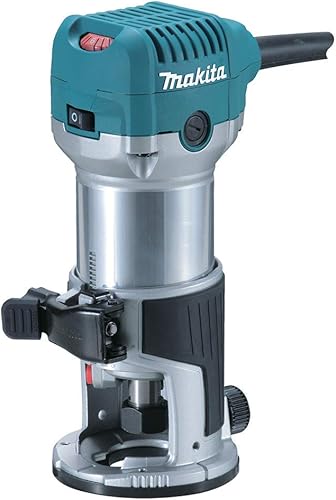
If you trim laminate, round over small edges and follow templates, a compact router is easier to handle. The Makita RT0701C weighs 3.9 lb and has a slim body for one hand use.
The Milwaukee cordless compact router weighs 4.8 lb and adds cordless freedom for on site work.
If you cut joinery, dados and mortises, a plunge base is the right tool. The SKIL combo has a 2-1/8 in plunge depth of cut.
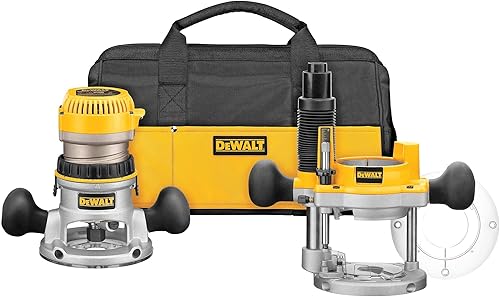
The DEWALT kit gives you both a fixed base and a plunge base on one 2-1/4 HP motor.
Our score weighs specs, features and buyer feedback against what you are shopping for. Higher scores here reflect a mix of power, bases included and ease of use for the task at hand.
The two routers side by side
Compact routers are smaller and lighter, while plunge routers offer deeper, controlled entry into the work. The table below shows the key gap in size and power.
| Feature | Compact fixed base | Full size plunge combo |
|---|---|---|
| Typical weight | 3.9 to 4.8 lb | 10.1 to 14.3 lb |
| Motor power | 1-1/4 HP | 2-1/4 to 2.5 HP |
| Amperage | 5 to 6.5 A | 12 to 14 A |
| Base | Fixed only | Fixed and plunge, or plunge |
| Best use | Trim, laminate, edge detail | Dados, mortises, deep cuts |
The size gap shows up in daily use. A compact router fits in your palm and turns easily at corners.
A plunge combo needs two hands and more bench space, but it carries power through hardwoods and deep cuts.
For a broader look at sizes, our guide to wood routers for woodworking explains how horsepower, collet size and base type fit different projects. Start there if you are new to routers.
What a compact router does best
A compact router is best for trim work, laminate, edge shaping and small templates. Its fixed base stays flat on the work, and you move the whole tool sideways to cut.
The Makita RT0701C 1-1/4 HP Compact Router runs at 10,000 to 30,000 RPM with electronic speed control. That range lets you match speed to the bit and material, which helps clean edges on small parts.
Its fixed base accepts industry standard template guides. That matters for pattern work, where a guide bushing follows a template while the bit cuts the same shape in the work below.
Compact routers also suit best small wood router searches, because size is the main benefit. You can reach inside small boxes, shape small parts and trim flush without a large motor blocking your view.
Compact router vs plunge router for trim work
For trim work, the compact router usually feels more precise because it is lighter and lower. You can see the bit line and steer around corners with less effort.
A plunge router can trim edges too, but its spring loaded base and larger handles make small moves harder. You also need to lock the depth before you start, which adds a step for a simple round over.
If most of your work is trim, start compact and add a plunge base later only if you need it. That order keeps your first router simple and light.
What a plunge router does best
A plunge router is best for cuts that start in the middle of a board, such as dados, mortises, grooves and stopped cuts. You set the depth stop, lower the bit straight down and then move to shape the cut.
The SKIL 14 Amp Plunge and Fixed Base has a 2-1/8 in plunge depth of cut, compared with 1-3/4 in on the fixed base. That extra depth helps with deep joinery and thick stock.
Its 14 amp, 2.5 HP motor includes both fixed and plunge bases. The speed control LCD display suggests a speed based on bit type and material, which helps you set RPM before you start.
A plunge base also helps with repeated cuts. You can set a turret or depth stop once, then plunge to the same depth on each pass.
That repeatability matters for shelves, hinges and matching parts.
The fixed base vs trim router choice
If you are torn between a full size fixed base and a trim router, think about weight first. A trim router is the smallest fixed base class, while a full size fixed base carries more power and a larger base.
Our fixed base vs trim router guide breaks down that size gap in more detail. It is a useful next read if the compact option here feels too small for your stock.
For this post, remember the core split. Compact means fixed base and light.
Plunge means spring action and depth control. A combo kit gives you both actions on one motor.
Power and speed: what the numbers mean
More horsepower helps in hardwoods and deep cuts, while variable speed helps you match the bit to the material. Neither number alone tells the whole story.
The DEWALT Router is a 2-1/4 HP, 12 amp kit with variable speed from 8,000 to 24,000 RPM. DEWALT says the electronic variable speed with full feedback control keeps speed constant under load.
Soft start reduces start up torque for better control.
The SKIL combo runs up to 25,000 RPM with soft start that ramps up from zero. That slow ramp helps you hold the tool steady as the bit starts to cut.
Compact models run at higher top speeds but with less power. The Makita goes to 30,000 RPM, and the Milwaukee goes to 31,000 RPM.
Higher RPM can help with small bits and clean edges, but power matters more in deep, heavy cuts.
Use lower speeds for larger bits and higher speeds for small bits, following the bit maker's guidance. Match speed to the material too, since hardwoods and dense stock need a steady feed rate.
Size, weight and control in real use
A compact router at under 5 lb is far easier to guide one handed than a plunge combo at 10 to 14 lb. Weight affects accuracy on small work and fatigue on long work.
The Makita weighs 3.9 lb with a slim, ergonomically designed body. The Milwaukee weighs 4.8 lb and adds cordless use, which removes cord drag on site.
The DEWALT kit weighs 10.1 lb as a full kit. The SKIL weighs 14.3 lb, which is the heaviest here.
That weight can help stability on a plunge cut, but it makes fine trim work more tiring.
Think about where you will use the tool. Overhead work, inside cabinets and small boxes all favor a compact router.
Bench work with large panels favors a plunge router with two hands on the handles.
Corded vs cordless in this comparison
Choose corded for shop power and long sessions, and choose cordless when you need freedom of movement on site. The Milwaukee is the only cordless pick here.
The Milwaukee Cordless Compact Router runs on 18V with a brushless motor. Its variable speed dial ranges from 10,000 to 31,000 RPM for clean edges and details.
The macro adjust button allows fast changes with 1.5 in of adjustable range.
Cordless use helps on ladders, at a customer's home and in large assemblies where a cord gets in the way. Corded models give you steady power for long routing sessions without watching battery charge.
If you work mostly in a shop, a corded compact router or a corded combo kit will serve you well. If you move around a site all day, cordless compact power is worth the trade off.
Bases, collets and what is included
Base type is the main difference in this compact router vs plunge router choice, and collet size decides which bits you can use. Check both before you buy.
The DEWALT DW618PKB includes a DW618M motor pack, a DW6184 fixed base and a DW6182 plunge base. It also includes 1/4 in and 1/2 in collets, a wrench, a large hole sub base, a vacuum adapter and a soft carry bag.
The SKIL RT1322-00 includes 1/4 in and 1/2 in collets, a collet wrench, a parallel guide, dust extraction adapters for both bases, a clear sub base, edge guide, depth adjustment wrench and chip shields.
Compact models focus on 1/4 in bits for trim work. The Makita fixed base accepts standard template guides, which helps with pattern routing.
Our guide to a universal plunge router base explains how some bases fit multiple motors. Check fit carefully before you mix brands.
Who should buy a compact router?
Buy a compact router if your work is mostly trim, laminate, edge shaping and small detail. Light weight and one hand control will matter more than deep plunge capacity.
The best compact plunge router page suits users who want depth control without a full size motor. That middle ground can suit smaller joinery work.
The Makita suits shop trim work with a corded set up. The Milwaukee suits on site trim work where a cord is a problem.
Both have fixed bases, so plan on adding a plunge tool later if your projects change.
For best compact router kit shoppers, check that the base type matches your main work.
Avoid a compact only set up if you plan deep joinery right away. Adding a plunge base later may cost more than buying a combo kit now.
Who should buy a plunge router or combo kit?
Buy a plunge router or combo kit if you cut dados, mortises, grooves and deep panels. You need spring action, depth stops and power through thick stock.
The DEWALT kit suits users who want both actions on one motor. You can use the fixed base for edge work and swap to the plunge base for joinery.
The micro fine depth ring adjusts in 1/64 in increments for precise settings.
The SKIL combo suits users who want maximum plunge depth. Its 2-1/8 in plunge capacity and 14 amp motor handle heavy cuts.
The three LED lights at the base of the motor help you see the bit line.
If your shop work spans many tools, our Best Miter Saw Compact Size guide is a separate topic, but it shows the same size thinking. Small tools suit small work, and large tools suit heavy stock.
Setup, safety and care tips
Set depth before you start, lock the base, and use a steady feed rate for clean cuts. Good setup matters more than horsepower for accuracy.
For a plunge router, set the depth stop and lower the bit to the work. Lock the plunge, move along the cut, then release the lock and let the springs raise the bit.
For a compact router, set depth with the motor in the base and test on scrap first. The Makita has a quick release cam lock for easy depth adjustments and base removal.
Wear eye and hearing protection, and keep hands clear of the bit path. Use a push block or a clamped guide near the end of a cut.
Clean the base, collets and guide rods after use. DEWALT uses precision machined brass bushings and case hardened steel guide rods for a smooth stroke, so keep those surfaces free of dust.
The verdict: which should you choose?
Choose a compact router for trim and edge work, and choose a plunge router or combo kit for joinery and deep cuts. In this compact router vs plunge router decision, your project list is the best guide.
Pick the Makita RT0701C if you want the lightest corded compact router for shop trim work. Pick the Milwaukee Cordless Compact Router if you need cordless freedom for on site trim and detail work.
Pick the DEWALT Router kit if you want one motor with both fixed and plunge bases for shop versatility. Pick the SKIL 14 Amp Plunge and Fixed Base if plunge depth and power are your top priorities.
For a wider view of router types, start with our wood routers for woodworking guide. Then check how to choose a miter saw only if saws are next on your list, since router and saw choices solve different problems.
Frequently asked questions
Is a compact router the same as a plunge router?
No. A compact router is a smaller fixed base tool for trim and edge work, while a plunge router has springs that lower the bit into the work.
Some kits offer both bases on one motor, but the actions differ in how a cut starts.
Which is better for edge work?
A compact router is usually better for edge work because its small body is easier to guide along a template or bearing. A plunge router can do edge work, but its larger base and spring action can make fine control harder on small pieces.
Which is better for cutting in the middle of a board?
A plunge router is better for cuts that start in the middle of a board, such as dados, mortises and stopped grooves. You set the depth, lower the bit straight down and then move along the cut, which a fixed base cannot do as cleanly.
Can one router do both jobs?
Yes, a combo kit with fixed and plunge bases can handle both roles with one motor. The DEWALT and SKIL kits here include both bases, so you can swap for trim work or plunge work without buying a second motor.
What size router do beginners need?
Beginners who mostly trim edges should start with a compact router, and beginners who plan dados or mortises should add a plunge base. Our score weighs specs, features and buyer feedback against what you are shopping for, so match the base to your first projects.


