How to Use Spring Clamps
Squeeze the handles, place the jaws over the work, then release them to hold light materials in place. Keep the clamp square to the joint, protect delicate surfaces, and use a stronger clamp when the spring grip is not enough.
On this page (8 sections)
- How do you use a spring clamp?
- Where should you place spring clamps?
- How much pressure should a spring clamp apply?
- Which spring clamp size suits the task?
- When are six-inch spring clamps useful?
- When should you use a different clamp?
- How do you check a spring clamp before using it?
- Which spring clamp should you choose?
Use a spring clamp by squeezing its handles, placing the jaws over the work, and releasing them to hold light materials in place. Set the clamp square to the joint, protect delicate surfaces, and switch to a different clamp if the spring grip cannot keep the work steady.
Spring clamps are quick to move and useful for short holding jobs. Their grip is limited by the spring and jaw shape, so choose them for positioning and light pressure rather than assuming they can replace a bar clamp.
How do you use a spring clamp?
Open the jaws with the handles, fit them over the work, and release the handles so the clamp closes around the material. Keep the clamp aligned with the area you want to hold, and make sure both jaws sit flat.
Before you let go, check that the pieces haven't shifted and that the clamp won't slip off an edge. Add another clamp if the work needs support at more than one point.
For a small woodworking project, a spring clamp can hold a trim piece or thin board in place while you adjust the fit. For a larger comparison of woodworking clamps, consider how much pressure, reach, and control the job needs.
Where should you place spring clamps?
Place each clamp close enough to the joint or edge to hold the pieces in alignment, without blocking your hands or tools. A clamp positioned at an angle can pull parts out of line or make its jaws sit unevenly.
For a short glue-up, place clamps along the area that needs to stay together and check that the pieces meet evenly. For a right-angle joint, see how to use corner clamps.
Use a protective offcut between the jaw and the work if the pads might leave a mark.
On thin stock, avoid clamping right at a fragile corner. A clamp closer to a supported area is less likely to crush or twist the material.
Can you use spring clamps on delicate finishes?
Use padded jaws or a scrap barrier on delicate finishes, and test the setup on an offcut first. Even a coated tip can leave a mark if it presses on a soft surface or catches a sharp edge.
Keep the jaws clean and remove sawdust or grit before clamping a finished face. Particles between the pad and surface can scratch the finish as pressure is applied.
How much pressure should a spring clamp apply?
Use only enough spring pressure to keep the work from slipping or shifting. A clamp's jaw opening does not tell you how much force it applies, so judge the setup by whether the material stays stable without bending or crushing.
Spring clamps are not the right choice when a joint needs firm, controlled pressure across a wide area. If the parts bow, separate, or move under light handling, switch to a bar clamp or another style with a more suitable grip.
Don't use a spring clamp to secure a heavy object overhead or to support something that could fall. Use a clamp designed for the load and confirm the work is stable before cutting, drilling, or routing.
For support under longer stock, see how to use sawhorses.
Which spring clamp size suits the task?
Choose a jaw opening that fits the material with room for the jaws to sit flat. Small clamps are handy for narrow stock and light craft jobs; larger clamps can reach around thicker pieces.
The Amazon Basics set includes 15 clamps with a 3/4 in jaw opening and 5 with a 1 in opening. Its PVC-coated tips are intended to protect surfaces, and the handles also have a PVC coating.
Choose this set if you want several compact clamps for thin stock or quick positioning. If you need wider reach, compare best spring clamps for woodworking and match the opening to your material.
When are six-inch spring clamps useful?
Six-inch spring clamps make sense when you need more reach than a small clamp provides. Check the actual jaw opening, since a clamp's overall length and its maximum opening are different measurements.
The HORUSDY clamps are 6 in long and have a maximum opening of 2.5 in. Their nickel-plated steel spring clip and non-slip plastic handle covers suit general woodworking, home decoration, and fabric or metal holding tasks.
Compare the best metal spring clamps for more options.
Consider these for light positioning when a smaller clamp cannot span the material. Compare best spring clamps 6 inch for more size-specific guidance, or see best spring clamps 2 inch for tighter spaces.
When should you use a different clamp?
Use a bar clamp or another more controlled style when the work needs steady pressure across a wider joint. Spring clamps are fastest for temporary holding, but they don't offer a screw mechanism to adjust pressure gradually.
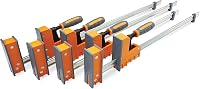
The WORKPRO set includes 4 bar clamps and 4 spring clamps in two lengths. The bar clamps can apply up to 50 lb of clamping force, while the spring clamps are useful for smaller, quicker holding jobs.
A bar clamp can be a better fit for a glue-up where you need to draw boards together and keep them aligned. Learn what a parallel clamp is before choosing one for a broad panel or cabinet assembly.
If the work is on a miter saw, use a clamp made for that setup. Our guide to the Best Miter Saw Clamp covers saw-specific options, and How To Use Miter Saw Clamp? explains safe placement for that tool.
How do you check a spring clamp before using it?
Check the spring, handles, and jaw pads before each use. Don't use a clamp with a cracked handle, loose jaw, damaged spring, or pad that no longer sits securely.
Squeeze the handles once away from the work to make sure the jaws open and close smoothly. Then place the clamp on the material and confirm it stays put with light pressure.
Keep fingers clear of the closing jaws. Store clamps where the handles won't be bent or the springs compressed under heavy items.
Which spring clamp should you choose?
Choose a compact set with smaller openings for thin stock and quick craft tasks. Choose six-inch clamps when the material needs a wider reach, and choose a bar clamp when you need more controlled pressure for a joint.
The Amazon Basics set covers 3/4 in and 1 in openings, while HORUSDY's six-inch clamps open up to 2.5 in. The WORKPRO set adds bar clamps for projects that need a screw-adjusted grip.
For any spring clamp, place the jaws flat, protect the surface, and verify the work stays stable before continuing. If it shifts or needs more force, use a clamp designed for that job.
Frequently asked questions
How do you use a spring clamp?
Squeeze the handles to open the jaws, set the jaws over the material, and release the handles. Place the clamp so it holds the pieces together without twisting them, and check that its pads sit flat.
Use another clamp or a different style if the spring grip cannot hold the work steady.
How much pressure does a spring clamp apply?
Spring pressure varies by clamp, and jaw opening alone doesn't tell you how firmly it grips. Use only enough clamps to keep the work from shifting, protect surfaces with suitable pads, and avoid relying on a spring clamp for a load that could fall or cause injury.
What can spring clamps hold?
Spring clamps suit quick, light holding tasks such as keeping thin boards aligned during a small glue-up, holding fabric, or securing a backdrop. They are less suited to joints that need controlled, strong pressure.
Match the clamp's opening and grip to the material, and test stability before letting go.
How do you keep a spring clamp from leaving marks?
Choose a clamp with soft or coated jaw tips, and place scrap material between the jaws and a delicate finish when needed. Keep the clamp square and avoid unnecessary pressure.
Test the setup on an offcut first, since coatings and pads do not guarantee protection on every surface.