Why Is My Kobalt Miter Saw Lock Handle Not Working?
A Kobalt miter saw lock handle not working is usually caused by debris, a worn cable or spring, or a loose pivot that stops the handle from holding the saw head. Clean the pivot, check the cable and lock pin, and tighten or replace the worn part to restore a firm lock.
On this page (13 sections)
- What does the lock handle actually do on a miter saw?
- Why is my Kobalt miter saw lock handle not working?
- How do you tell a faulty lock handle from normal release?
- How do you clean the lock handle and pivot area safely?
- Which parts cause a loose or stiff Kobalt lock handle?
- How do you tighten or adjust the lock handle pivot?
- When should you replace the cable, spring, or handle?
- How do you test the lock after a repair?
- Can a worn blade or vibration make the lock feel faulty?
- What other parts should you check while the saw is open?
- How does dust collection affect lock handle problems?
- When should you stop and get professional help?
- What is the safest order to fix the Kobalt lock handle?
A Kobalt miter saw lock handle not working is usually caused by debris, a worn cable or spring, or a loose pivot that stops the handle from holding the saw head.
Clean the pivot, check the cable and lock pin, and tighten or replace the worn part to restore a firm lock.
The lock handle holds the saw head at the angle you set.
When it fails, the head can drift while you cut, so the workpiece may not match your setting.
What does the lock handle actually do on a miter saw?
The lock handle holds the saw head at a set miter or bevel angle.
You pull or turn it to release the head, swing the head to the angle, then lock it again.
On many Kobalt models, the handle pulls a cable or pushes a pin.
That pin drops into a notch or engages a plate, so the head stays put under cutting pressure.
If the handle feels stiff, the cable or pivot may be dry or dirty.
If it feels loose, the spring tension or pivot bolt may be worn.
Why is my Kobalt miter saw lock handle not working?
The most common cause is a dirty pivot or lock area packed with sawdust.
Dust can stop the pin from seating, even if the handle still moves.
Other causes include a loose pivot bolt, a stretched cable, a bent pin, or a weak return spring. For a Ryobi-specific example, see angle lock troubleshooting.
A cracked pivot boss can flex under load, so check near the handle base. A worn grip can also slip, so you may think you locked it when you did not.
How do you tell a faulty lock handle from normal release?
A faulty lock handle will not hold the head steady when you push on it.
Normal release moves smoothly, and relocking seats with a firm stop.
Try this with the saw unplugged. Release the head, swing it slightly, lock it, then push gently with an open palm.
The head should not creep or spring back. If it moves while locked, the pin, cable, spring, or pivot needs attention.
For a related fault, see miter saw lock pin not working if the handle moves but the pin will not drop into place.
How do you clean the lock handle and pivot area safely?
Cleaning is the first fix to try because it costs nothing and often restores the lock.
Unplug the saw and remove the blade or lock the blade guard before you reach near the head.
Use a small brush to sweep sawdust from the pivot, cable housing, and lock notches.
Follow with short bursts of compressed air, keeping the nozzle away from your face and skin.
Wipe metal parts with a dry cloth.
Do not soak the pivot with water, and do not spray lubricant inside lock notches unless your manual allows it.
What should you look for while cleaning?
Look for packed dust, resin buildup, and small metal shavings.
Resin can make the handle drag, while shavings can stop full engagement.
Check the cable housing for a kink or a melted spot.
Spin the handle through its full travel after cleaning.
It should move without grinding, catching, or sticking halfway.
Which parts cause a loose or stiff Kobalt lock handle?
A loose handle usually points to a worn spring, stretched cable, or loose pivot bolt.
A stiff handle usually points to dirt, corrosion, or a cable binding in its housing.
The pivot bolt holds the handle to the saw head. If it backs out, the handle wobbles and the pin may miss the notch.
The cable transfers your hand motion to the lock. If it stretches, the handle needs extra travel before the pin fully seats.
The spring returns the handle to its locked position. A weak spring can leave the lock half engaged.
How do you tighten or adjust the lock handle pivot?
Start by tightening the pivot bolt a quarter turn at a time.
Unplug the saw, hold the handle steady, and use the correct wrench. Test after each small change for smooth pivoting.
Do not over-tighten. Excess force can crack the boss or strip threads.
If threads are stripped, fit a new bolt and nut set for your model. Match size, length, and head style exactly.
Our broader guide, How To Fix A Miter Saw?, walks through the same unplug, inspect, and test order for other common faults.
When should you replace the cable, spring, or handle?
Replace the part when cleaning and tightening do not restore firm, repeatable locking.
A slipping handle, frayed cable, or weak spring needs a new part.
Order by your exact Kobalt model number. Small differences in cable length or pin size can stop the lock from seating.
Keep the old part beside the new one. Measure length and compare hook ends before you remove it.
Do not bend a new spring to lengthen it. Bending weakens the steel.
How do you replace a lock cable without damaging the housing?
Work slowly and route the new cable along the same path as the old one.
Remove one screw at a time, keep the screws in a tray, and note which screw goes where.
Pull the old cable out gently.
If it catches, check for a hidden clip or a bend in the housing instead of forcing it.
Feed the new cable through the housing and connect the ends in the same order.
Test the handle before you close the cover, and cycle it several times to check for binding.
How do you test the lock after a repair?
Testing proves the repair worked.
Cycle the handle 10 times, lock the head at three angles, and push-test each angle with the saw unplugged.
Try a left angle, a right angle, and straight if allowed. The head should stay put with no creep.
Check the pin seats fully at each notch. A half-seated pin can slip under cutting load.
If the head still moves, recheck cable tension and the pivot bolt. Do not cut until the lock holds alone.
Can a worn blade or vibration make the lock feel faulty?
Yes, separate the lock fault from the cut fault.
A dull or warped blade can push the head sideways, which makes a weak lock feel worse.
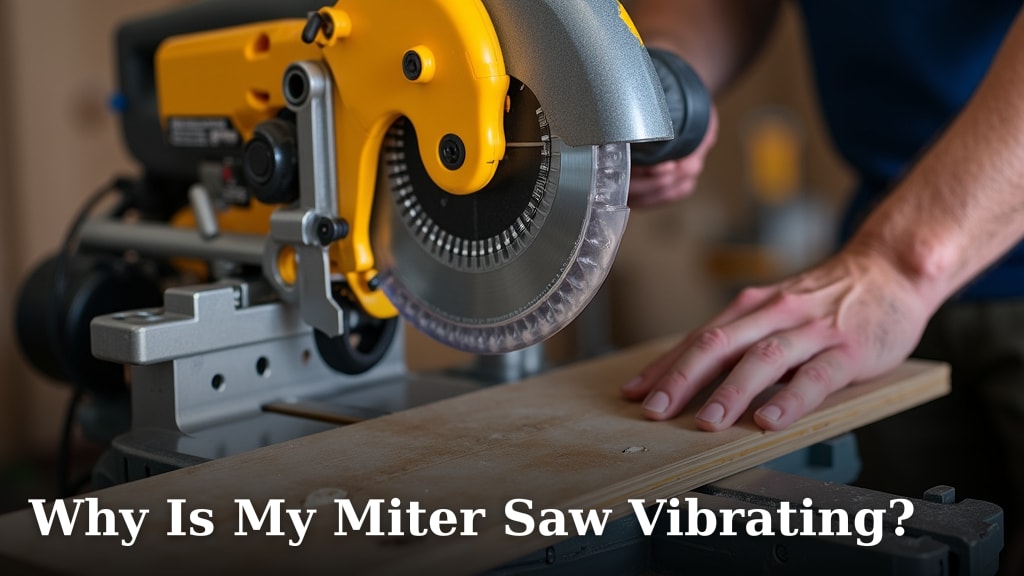
If the saw hums, rattles, or chatters, read Why Is My Miter Saw Vibrating? before you blame the handle alone.
Check blade tightness and arbor washer order, since a loose blade can wobble and pull against the head.
The DEWALT 12-Inch Miter Saw Blade set includes one 80-tooth blade and one 32-tooth blade for crosscutting, so a sharp blade will not mask a good lock.
Never run a test cut with a loose lock just to see what happens.
Fix the lock first, then judge the blade.
What other parts should you check while the saw is open?
Check the lock pin, notches, blade guard, and pivot hardware together.
Sawdust can hide a bent pin or cracked notch that cleaning alone will not fix.
Look for rounded notches, as they let the pin sit higher and make the lock feel soft.
Also check the clamp or hold-down, since a weak clamp lets the workpiece move and looks like a lock problem.
If the workpiece shifts but the head stays locked, see mitre saw not gripping for clamp and fence checks.
After the repair, the DEWALT Miter Saw Crown Stops include 2 steel stops that position crown molding vertically against the fence, and they do not fix a lock handle.
Use them after the lock holds firmly, so the molding stays in place while you cut.
How does dust collection affect lock handle problems?
Dust collection matters because a blocked bag or chute packs sawdust around the pivot.
When dust backs up, it can fill the lock area and stiffen the handle.
Empty the bag or canister before it is full, as a full bag raises back pressure and pushes fine dust into seams.
If fine dust keeps building up, check the hose and chute for a blockage.
Our guide, Why Is My Miter Saw Dust Collection Not Working?, covers bag, hose, and chute faults in order.
Clean the lock area after any dust job, since a quick brush and air blast stops dust hardening into resin.
For finish work after cleaning, the Freud Diablo Finish Saw Blade is a 7-1/4 inch, 40-tooth ATB blade with a 5/8 inch arbor for smooth crosscuts in hardwood, softwood, and plywood.
Fit the right blade for the saw and job, and never use a blade that wobbles on the arbor.
When should you stop and get professional help?
Stop when the head will not lock at any angle, the pivot is cracked, or you see arcing near the switch.
Those faults go beyond a handle cleaning or bolt check.
Also stop if the cable housing is split or the spring is missing. Forcing the handle can snap the pin or bend the bracket.
Take photos of the worn part and note your model number before you call a repair shop.
Unplug the saw and store it where it cannot be knocked or used.
What is the safest order to fix the Kobalt lock handle?
The safest order is unplug, clean, inspect, tighten, replace, then test.
Skip none of these steps, and do not cut until the head passes a push test.
Clean first because dust is the most common cause.
Then check the pin, cable, spring, and pivot bolt for wear or damage, and tighten the pivot a small amount at a time.
Replace any part that is cracked, frayed, bent, or stretched, and match it to your model number.
If the head still drifts, check the blade and vibration.
For a cut that will not stay square after the lock is fixed, see Why Is My Miter Saw Cut Not Square? to check fence, blade, and head alignment.
Frequently asked questions
Why is my Kobalt miter saw lock handle not working?
It is usually debris in the pivot, a loose bolt, a worn cable, or a weak spring that no longer pulls the lock into place. Clean the joint, check for cracks or bent parts, and tighten the pivot hardware.
If the handle moves freely or the pin will not engage, replace the worn part instead of forcing it.
Can I use the saw if the lock handle is loose?
No. A loose lock can let the saw head drift during a cut and ruin the angle or create a kickback risk.
Hold the head firmly by hand only for positioning, not for cutting, and repair the lock first.
If the pin will not seat fully, stop and fix the cause.
What tools do I need to fix the lock handle?
Most jobs need a screwdriver set, an adjustable wrench, a small brush, compressed air, and a cloth. Some repairs also need a model-specific replacement cable, spring, or pivot bolt.
Match any replacement to your exact Kobalt model number before you order it.
When should I replace the handle instead of repairing it?
Replace it if the handle is cracked, the pivot hole is stretched, the cable is frayed inside, or the spring will not hold tension. A new handle is usually cheaper and safer than drilling, bending, or gluing a broken part.
Keep the old part to match the shape and hole size.