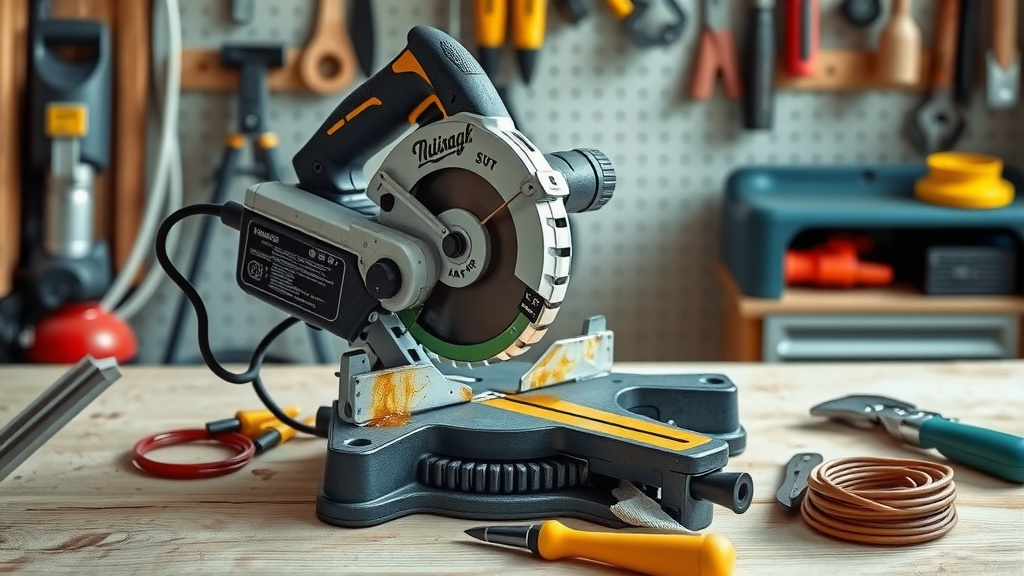
Should You Oil a Miter Saw Table?
You should not oil the table of a miter saw in the usual sense. Clean and dry the table, protect it from rust with a thin wipe of wax or light oil for metal tops only, and keep oil on the moving parts.
On this page (11 sections)
- Should you oil the table of a miter saw?
- What does oiling a miter saw table do?
- How is table care different from oiling the saw?
- What kind of table top do you have?
- How do you clean the table before any coating?
- Can wax or light oil protect a metal table?
- Which products help with clean miter saw cuts?
- What should you never put on the table?
- How often should you clean and check the table?
- How does storage affect the table?
- Should you oil the table of a miter saw: final rule
You should not oil the table of a miter saw as a regular care step. Clean and dry the table, add only a thin protective coat to bare metal when the maker allows it, and save oil for the moving parts.
That split keeps cuts clean and the saw moving freely.
Many owners confuse two jobs. The table is a work surface for stock to slide on.
The pivot, rail, and guard are moving parts that need oil. Oil helps the second group and often hurts the first by catching dust and leaving marks on wood.
Should you oil the table of a miter saw?
No, do not oil the table as a routine step. A clean, dry, and smooth top helps stock slide in a straight line.
Oil can collect dust, attract pitch, and leave a faint stain on light wood.
A protective coat suits bare metal tops only. A thin wipe of paste wax or a few drops of light oil, buffed off, can slow rust.
Skip it on painted, coated, or damaged tops unless the manual allows it. Our guide on how to clean a miter saw walks through the full clean in order.
What does oiling a miter saw table do?
Oiling the table does not make the saw cut better. It can make stock glide at first, then drag once dust sticks to the film.
That drag can push a piece off line during the cut.
A dry top gives more control. You can feel small changes in pressure as you feed the work.
On a slick top, the piece may jump forward when the blade bites. If rust is your worry, dry storage helps more than oil.
See how to store cross mitre saw outside if outdoor storage is your only choice.
How is table care different from oiling the saw?
Table care protects the surface. Saw oiling protects the motion.
The manual names each spot that needs oil, and none of those spots is the wide flat top. Pivots, the arm hinge, the sliding rail, and the guard hinge take small drops of light oil.
The blade, the fence face, and the table take none. Oil on a pivot helps the arm swing.
Oil on the table can mark wood and hold grit near the cut line. For the moving parts, follow how to oil a miter saw step by step.
Add oil only where the manual shows a friction point.
How do you tell a pivot from the table?
A pivot turns. Look for pins, bolts, and hinge joints that swing or slide.
Those parts move under load and need a light film of oil.
The table does not turn or slide. If the turntable base will not rotate, see miter saw base rotation issue.
Stock moves across it, but the top itself stays put.
The fence also holds stock square, but it is not a pivot. Wipe it clean and do not oil the face that touches wood.
What kind of table top do you have?
Your answer changes with the material. **Bare cast iron or steel needs rust care.
Painted or coated tops need gentle cleaning.** Read the manual for the exact finish on your model.
Bare metal shows rust spots fast in a damp shop. A thin coat of wax or light oil, buffed dry, slows that rust.
Painted tops can chip if you use strong cleaners or steel wool. Use a soft cloth, warm water, and mild soap.
Aluminum resists rust but can stain and scratch. Clean it with a mild cleaner and a soft pad.
Test wax in a small spot first, as it can discolor some finishes.
How do you clean the table before any coating?
Clean first, coat second. Brush, wipe, dry, then decide if a coat is needed.
A coat over sap or rust will trap the problem and look worse.
Unplug the saw and let the blade stop. Brush dust from the top, fence, and scale.
Wipe the top with a cloth dampened with water and a drop of mild soap. For sap, use a cleaner made for tool tops and follow its label.
Check the corners and the area around the blade slot. Grit hides there and can scratch stock on the next cut.
Dry the surface right away.
Can wax or light oil protect a metal table?
Yes, a thin coat can help bare metal. Use paste wax or a few drops of light oil, then buff until the top feels dry.
No wet shine should remain.
Paste wax suits many owners because it stays put and buffs to a dry, slick feel. Light oil works too, but a little goes a long way.
Too much will transfer to wood.
Apply the coat in a small area, let it sit for a few minutes, then buff it hard with a clean cloth. The top should feel smooth, not greasy.
Do not use motor oil, thick grease, or spray lube on the table.
Which products help with clean miter saw cuts?
Clean cuts come from a sharp blade, a true fence, and a stable table. The right blade and accessory can help you get that clean result.
A dull or wrong blade will tear wood no matter how clean the table is.
After a kickback, look for bent miter saw blade signs. A loose fence or bent stop causes the same issue.
For crown molding, accurate stops matter as much as a clean top. The DEWALT Miter Saw Crown Stops (DW7084) position crown molding vertically against the saw fence and include 2 stops, one for each side of the blade.
Use these stops when molding tends to rock on the fence. They help you repeat the same angle from piece to piece.
What blade helps with crosscuts in hardwood?
For 12 in miter saws, tooth count changes the finish. An 80-tooth blade gives a smoother crosscut in hardwood and plywood.
A 32-tooth blade in the same set cuts faster on thicker stock.
The DEWALT 12-Inch Miter Saw Blade 2-Pack (DW3128P5, DW3123) includes one 80-tooth blade and one 32-tooth blade. DEWALT says both are tungsten carbide crosscutting blades for miter saws and slide miter saws.
Choose the 80-tooth blade for trim, hardwood, and finish work. Choose the 32-tooth blade for framing stock where speed matters more than a glass-smooth edge.
When does a 7-1/4 in finish blade fit the job?
A smaller finish blade suits repair work and portable jobs. A 40-tooth ATB blade in 7-1/4 in gives a smooth crosscut in hardwood, softwood, and plywood.
Size limits where you can use it, so check your saw first.
The Diablo Finish Saw Blade - 7-1/4 in Dia., 40 ATB, 5/8 in Arbor, 8000 Max RPM (D0740A) has a 5/8 in arbor and a max speed of 8000 RPM. Freud says it uses TiCo Hi-Density Carbide teeth and a Perma-SHIELD non-stick coating.
This blade fits saws that take a 7-1/4 in blade with a 5/8 in arbor. It is not a substitute for a 12 in miter saw blade.
Match diameter, arbor, and max RPM to your saw before you buy.
What should you never put on the table?
Never put motor oil, grease, or thick spray lube on the table. Those films attract dust, mark wood, and can make stock creep.
They also make the next clean harder.
Never soak the top with cleaner. Excess liquid can run into the pivot, motor vents, and blade area.
Spray cleaner onto a cloth, not onto the saw.
Never use steel wool on a painted or coated top. It can scratch the finish and open the surface to rust.
Never oil the blade to stop rust on the table. Blade care is a separate job.
How often should you clean and check the table?
Wipe the table after each use. A 2 minute clean keeps sap and dust from building up.
Check the top, fence, and scale each time you set up.
In a dusty shop, wipe the top between jobs as well. Sawdust left overnight can hold moisture against bare metal, and that moisture starts rust spots.
Once a month, give the saw a full clean and check the fence for nicks and the table for rust. If you use the saw daily, check the sliding rail more often, as grit there makes the cut wander.
How does storage affect the table?
Dry storage protects the table more than any coating. Keep the saw dry, covered, and off a cold floor when you can.
Cold concrete can bead moisture on bare metal. A cover or shop towel keeps dust off between jobs.
Wipe the top dry before you cover it, as a cover over a wet top traps moisture. If the saw lives outside for part of the year, check the top after rain or heavy dew and dry it fully.
Add a thin wax coat to bare metal when needed. Our guide on how to store cross mitre saw outside covers covers, stands, and weather care.
We also compared owner reports in mitre saw how much expected life to see what helps a saw last.
Should you oil the table of a miter saw: final rule
Do not oil the table as a habit. Clean it, dry it, and protect bare metal with a thin buffed coat only when the maker allows it.
Keep oil for the pivots and rails the manual names. Pick the right blade for the wood and keep the fence true.
Wipe the top after each job. Those steps do more for cut quality than any oil on the table ever will.
For table support, check our Best Miter Saw Table guide and the Best Miter Saw Work Table guide to match a stand to your saw size and shop space.
Frequently asked questions
Should you oil a miter saw table?
No, do not oil the main table as a routine step. Clean off dust and sap, dry the surface, and use a light protective coating only on bare metal if the maker allows it.
Keep saw oil for pivots and rails named in the manual.
What oil goes on a miter saw?
Use only the light machine oil or lubricant the maker names for the saw. Put it on pivot points, the sliding rail, and the blade guard hinge in tiny drops.
Wipe away the extra so it does not reach the table or the wood.
Can paste wax hurt a miter saw table?
Paste wax is often used as a thin protective layer on bare metal. It helps stock slide and adds some rust protection.
Test it first, buff it well, and do not use it if your manual warns against coatings on the table.
Why does my miter saw table feel sticky?
Built up sap, pitch, and old oil usually cause the drag. Unplug the saw, brush off dust, and clean the top with a mild cleaner made for that surface.
Dry it fully, then check the fence and scale for the same build up.