What Is a Compound Miter Saw?
On this page (6 sections)
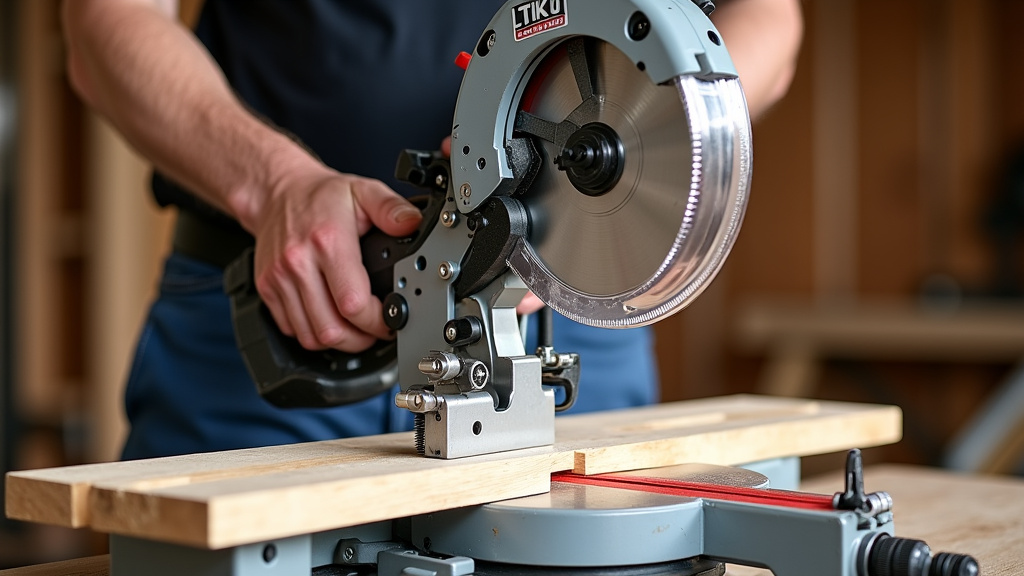
A compound miter saw is a specialized power tool that lets you make two types of angled cuts at the same time. You can adjust the blade’s angle (miter) and also tilt the entire saw head (bevel). This combination makes complex cuts much easier for your woodworking projects.
You’ll find these saws are incredibly useful for tasks like installing crown molding or building furniture. We found that they save you time and effort compared to traditional hand tools. Many builders say they are a must-have for achieving precise, tight-fitting joints.
TL;DR: Compound Miter Saw
- Makes angled cuts in two directions at once.
- Combines miter (left/right) and bevel (tilt) adjustments.
- Ideal for complex woodworking, like crown molding.
- Offers high precision and saves work.
- A versatile tool for serious DIYers and professionals.
So, how exactly does this clever tool work, and why might you need one? Let’s take a closer look at what makes the compound miter saw so special.
Understanding the Compound Miter Saw’s Mechanics
At its heart, a compound miter saw is designed for precision. It combines two critical movements – miter cuts and bevel cuts – allowing you to create complex angles in one go. We found this dual capability is what makes it so versatile for woodworking projects.
What is a Miter Cut?
Imagine you’re framing a picture, and you need the corners to meet perfectly. A miter cut involves rotating the saw blade left or right on its base. This creates an angle across the width of your material, like cutting the ends of trim pieces to join at 45 degrees.
It’s like turning your wrist while holding a knife flat to the cutting board. You’re changing the angle relative to the fence, which is the backstop for your wood.
What is a Bevel Cut?
Now, picture making a slanted edge on a board, perhaps for a cabinet door. A bevel cut involves tilting the entire saw blade assembly to one side. This creates an angle through the thickness of your material.
Think of it as tilting your knife, blade and handle together, relative to the cutting board. The angle is no longer flat; it’s angled down into the wood. We found that most compound miter saws can tilt, or bevel, to at least 45 degrees, and some can go further.
The Magic of a Double Compound Miter Cut
This is where the power and convenience of a compound miter saw truly shine. When you make a “double compound” cut, you are doing both at once. You miter the blade (left/right) AND bevel the blade (tilt) simultaneously.
Why would you need this? Crown molding is the classic example (This Old House explains it well). Those pieces sit at an angle on your wall and ceiling. To get them to fit correctly in a corner, you need both a miter and a bevel. Doing this with a standard miter saw would require flipping the wood or using complex jigs. A compound miter saw simplifies this significantly, saving you a lot of time and potential errors.
Types of Compound Miter Saws
Not all compound miter saws are created equal. There are a few main types, each with its own advantages and disadvantages. Understanding these differences will help you choose the best saw for your projects.
Single-Bevel Compound Miter Saw
A single-bevel saw means the blade assembly can only tilt in one direction, typically to the left. If you need to make a bevel cut in the opposite direction, you’ll have to flip your workpiece over. While this isn’t a deal-breaker for many DIYers, it can be less convenient for repetitive tasks.
- Can bevel in one direction (usually left).
- More affordable than double-bevel models.
- Good for most common tasks.
- Requires flipping material for opposite bevels.
Double-Bevel Compound Miter Saw
As the name suggests, a double-bevel compound miter saw allows the blade to tilt both left and right. This is a huge convenience, especially for cutting long pieces of material or when making many identical cuts. You won’t have to flip your workpiece, which means more consistency and less room for error.
- Can bevel left and right.
- Increases efficiency for repetitive cuts.
- Reduces material handling and potential mistakes.
- Generally more expensive.
Sliding Compound Miter Saw
A sliding compound miter saw takes things a step further. It has rails that allow the saw head to slide forward and backward, increasing the cutting capacity. This means you can cut much wider boards than with a fixed-head miter saw.
Think of it like having a small table saw combined with a miter saw. We found this feature is particularly useful for cutting wide shelving or decking materials. Many professionals consider the sliding, double-bevel compound miter saw to be the ultimate versatile tool for job sites.
- Saw head slides on rails.
- Greatly increased cutting capacity for wider boards.
- Combines miter, bevel, and sliding functions.
- Often the most expensive option.
- Can take up more space in your workshop.
Key Features and Considerations When Buying
When you’re ready to get your own compound miter saw, there are a few things you’ll want to keep in mind. These features can impact the saw’s performance, safety, and suitability for your projects.
Blade Size
The size of the blade, measured in inches, determines the saw’s cutting capacity. Common sizes are 8, 10, and 12 inches. A larger blade means you can cut thicker and wider material. For example, a 10-inch blade is a common all-around choice for many DIY tasks, but a 12-inch blade will handle larger timbers with ease.
Motor Power (Amperage)
The motor’s power is usually indicated by its amperage. Higher amperage (e.g., 15 amps) means more power, which is important for cutting through dense hardwoods or making long cuts without bogging down the blade. We found that a more powerful motor will stay consistent, even when working with tough materials.
Positive Stops
Positive stops are pre-set detents at common angles (like 0, 15, 22.5, 30, and 45 degrees). These make it quicker and easier to set precise angles. We recommend looking for saws with clear, easy-to-engage positive stops for both miter and bevel adjustments.
Laser Guide
Many modern miter saws come with a built-in laser guide. This projects a line onto your workpiece, showing you exactly where the blade will cut. It can be a huge aid for accuracy, helping you line up your cuts perfectly before the blade even touches the wood. However, remember to always double-check with a pencil mark (Occupational Safety and Health Administration advises this).
Dust Collection
Woodworking creates a lot of dust. A good dust collection system will help keep your workspace cleaner and improve visibility. Many saws come with a dust bag, but connecting to a shop vacuum provides much better dust extraction, which is healthier for you (Mayo Clinic).
Why Choose a Compound Miter Saw?
You might be wondering, “Do I really need one of these?” The answer often depends on the complexity and frequency of your woodworking projects. We found these saws offer significant advantages.
| Feature | Benefit for You |
|---|---|
| Dual Angle Cuts | Create complex joints like crown molding easily. |
| Precision | Achieve tight-fitting, professional-looking results. |
| Speed | Make many accurate, repetitive cuts much faster. |
| Versatility | Great for trim work, framing, decking, and furniture. |
| User-Friendly | Simpler setup for angled cuts compared to other saws. |
If you’re
- Installing baseboards or crown molding.
- Framing a shed or putting up deck railings.
- Building furniture or cabinets.
- Working with anything that requires angled cuts.
Conclusion
You now know that a compound miter saw is a powerful addition to your workshop. Its ability to make both miter and bevel cuts at once truly simplifies complex woodworking. We found that choosing between single-bevel, double-bevel, or sliding models depends on your project needs and budget. Investing in a quality saw with features like precise angle stops and good dust collection will pay off.
With this information, you can confidently choose the right compound miter saw. Get ready to elevate your craftsmanship and tackle projects with greater ease and accuracy.
Frequently Asked Questions
Can a compound miter saw cut metal?
No, a standard compound miter saw is designed for cutting wood and some plastics. Cutting metal requires a special abrasive blade and a saw specifically designed for metal, often called a chop saw. Using the wrong blade or saw can be dangerous and damage the tool.
What safety precautions should I take with a compound miter saw?
Always wear safety glasses and hearing protection when operating your saw. Ensure your workpiece is securely clamped before cutting. Keep hands clear of the blade path, and never disable safety guards. We recommend unplugging the saw when changing blades or making adjustments.
How do I maintain my compound miter saw?
Regular maintenance is key for longevity and performance. Keep the saw clean, especially around the pivot points and motor vents. Inspect the blade for sharpness and damage, and replace it when needed. Periodically check and tighten any loose bolts or screws.
What’s the difference between a miter saw and a chop saw?
A miter saw is primarily for precise angled cuts in wood, offering miter and bevel adjustments. A chop saw, usually for metal or masonry, typically makes straight 90-degree cuts. We found that chop saws often use abrasive discs rather than toothed blades.
Can I use a compound miter saw for decking?
Yes, a compound miter saw is excellent for decking projects. It allows you to make quick, accurate crosscuts for deck boards and precise mitered cuts for railings or fascia. A sliding compound miter saw is especially useful for cutting wider deck planks.