
What To Use Instead Of A Miter Saw?
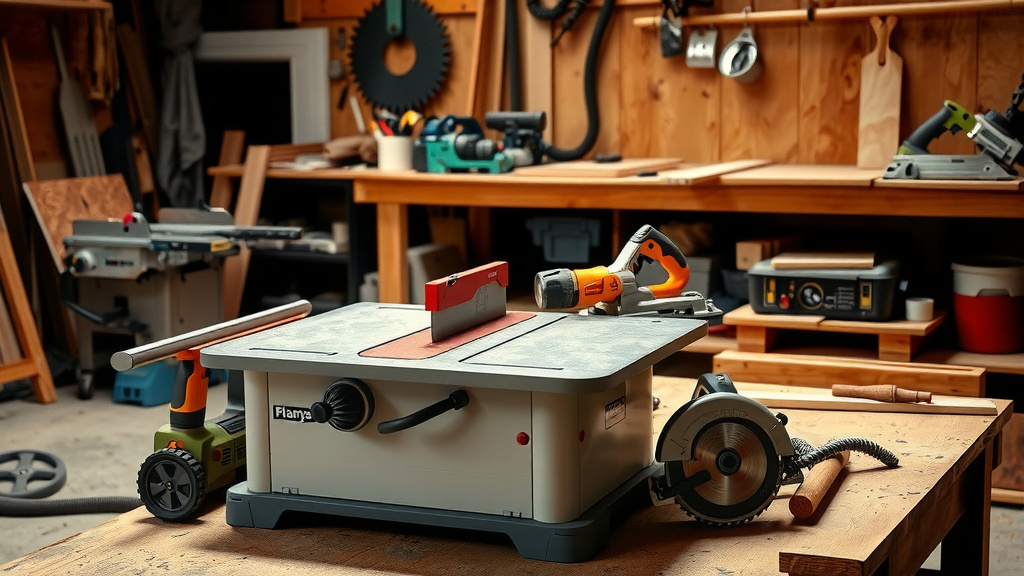
If you need an alternative to a miter saw, a circular saw paired with a guide, a table saw, or even a handsaw can handle many crosscuts and angled cuts effectively.
For precise, repeatable cuts without a miter saw, consider a combination of a reliable straight edge and a good quality circular saw to achieve similar results.
Here’s a quick overview of what you’ll find in this guide:
- Discover how a circular saw can replicate many miter saw tasks.
- Understand the role of a table saw for wider, more consistent cuts.
- Explore traditional hand tools when power isn’t an option.
- Learn about jigsaws and oscillating tools for unique cutting needs.
- Get tips for achieving accuracy and safety with your chosen alternative.
What To Use Instead Of A Miter Saw?
You can substitute a miter saw with several tools, including a circular saw with a guide, a table saw, or even traditional hand tools like a handsaw for various cutting tasks.
Each alternative offers specific advantages for different types of woodworking projects, depending on your needs.
The Versatile Circular Saw: Your Go-To Alternative
Many experts say a circular saw is often the closest power tool alternative to a miter saw. It’s portable and can make straight, angled, and even bevel cuts.
You will need a straight edge or a cutting guide to ensure accuracy, especially for crosscuts on wider boards.
Circular Saw for Crosscuts and Angles
To make a crosscut, simply clamp your material down and use a speed square or a straight edge as a guide. This method helps you achieve surprisingly precise cuts (woodworking best practices suggest).
For angled cuts, you can adjust the shoe of your circular saw to the desired degree. Then, use a guide to ensure a clean, straight line.
Table Saw: The King of Repeatability
If you’re working with larger sheet goods or need to make many identical cuts, a table saw is an excellent replacement. It offers unmatched precision and repeatability for both crosscuts and rip cuts.
However, it’s a stationary tool and generally less portable than a circular saw.
Crosscutting with a Table Saw
You’ll use a miter gauge or a crosscut sled on your table saw for precise crosscuts. These accessories ensure your cuts are consistently square and accurate.
For wider pieces, a crosscut sled is much safer and more stable, providing better control during the cut.
The Humble Handsaw: Precision and Quiet Power
Don’t underestimate the power of a good handsaw, especially for smaller projects or when noise and dust are concerns. They offer surprising accuracy with practice.
While slower, they provide a connection to the material that power tools sometimes lack.
Achieving Accuracy with a Handsaw
A sharp handsaw combined with a miter box allows you to make extremely precise 90-degree and 45-degree cuts. It’s an affordable and effective solution for many tasks.
For longer cuts, marking your line clearly and taking steady, even strokes is essential for a straight result.
Jigsaw and Oscillating Tool: For Curves and Detail
These tools won’t replace a miter saw for long, straight cuts, but they are fantastic for tasks where a miter saw simply won’t work. Think curves, intricate shapes, or plunge cuts.
A jigsaw is ideal for cutting complex shapes and can handle various materials, while an oscillating tool excels at detailed work in tight spaces.
When to Grab a Jigsaw or Oscillating Tool
When you need to cut a circle or a complex curve, a jigsaw is your best friend. Its thin blade allows for nimble maneuvering through wood and other materials.
An oscillating multi-tool, meanwhile, is fantastic for flush cutting trim, making small precise cutouts, or sanding in awkward spots. It’s a true problem solver in the workshop.
Choosing Your Miter Saw Alternative: A Quick Checklist
Before you dive into a project, consider these points to pick the best tool for the job:
- What type of cut do you need: crosscut, rip cut, or angle?
- How important is portability versus stationary power?
- What is the material and its thickness you are cutting?
- How much accuracy and repeatability do you require?
- What are your budget and available workspace?
Safety First: Always Prioritize Protection
Regardless of the tool you choose, safety is paramount. Always wear appropriate personal protective equipment (PPE), including safety glasses and hearing protection (OSHA guidelines confirm).
Ensure your workpiece is securely clamped before making any cuts. Never rush, and always keep your hands clear of the blade’s path.
Alternative Tools Comparison
Understanding the strengths of each tool can guide your choice. Here’s a simple comparison:
| Tool | Best For | Key Advantages | Considerations |
|---|---|---|---|
| Circular Saw | Straight & Angled Cuts | Portable, versatile, powerful | Needs a guide for accuracy |
| Table Saw | Repeatable Cross & Rip Cuts | High precision, consistency | Less portable, requires space |
| Handsaw | Small Cuts, No Power Needed | Quiet, precise with a miter box | Slower, requires effort |
| Jigsaw | Curves & Intricate Shapes | Maneuverable, versatile materials | Not ideal for long straight cuts |
| Oscillating Tool | Detail work, Flush Cuts | Compact, good for tight spaces | Limited to smaller cuts |
Conclusion
While a miter saw is a fantastic tool for precise crosscuts and angled cuts, it’s certainly not the only option. We found that with the right technique and accessories, you can achieve similar or even better results using a circular saw, a table saw, or even a handsaw.
Your choice depends on your specific project, budget, and the level of precision you need. Don’t be afraid to experiment with different tools to find what works best for you and your workshop.
Frequently Asked Questions (FAQs)
Can a circular saw really be as accurate as a miter saw?
With a high-quality blade and a reliable straight-edge guide or track system, a circular saw can indeed achieve accuracy very close to that of a miter saw, especially for crosscuts on wider boards. Many professionals use this setup for precise cuts.
What is the cheapest alternative to a miter saw?
The most budget-friendly alternative is typically a good quality handsaw paired with a miter box. You can often find these for a fraction of the cost of power tools, and they offer surprising accuracy for basic angled cuts.
Is a table saw safer for crosscuts than a circular saw?
When used with a miter gauge or, even better, a crosscut sled, a table saw can offer a very safe and controlled method for crosscutting. A circular saw, while versatile, requires careful setup with guides to maintain safety and accuracy, as the blade is more exposed.
Can I make compound miter cuts without a miter saw?
Making compound miter cuts (an angle and a bevel simultaneously) without a miter saw is challenging but possible. You would typically need a circular saw with a bevel adjustment, carefully set the angle and bevel, and then use a precise guide for the cut. It requires patience and careful measurement.
When is it absolutely necessary to have a miter saw?
A miter saw becomes almost indispensable when you need to make many repetitive, precise, identical crosscuts and miter cuts quickly and efficiently, especially for tasks like framing, trim work, or flooring. For occasional cuts, alternatives work well, but for volume, the miter saw shines.
